





















Supreme Court Rejects Justice Yashwant Varma’s Plea, Clears Way for Impeachment Probe
The Supreme Court dismisses Justice Yashwant Varma’s plea challenging impeachment proceedings, upholding the Lok Sabha Speaker’s authority and reinforcing constitutional procedure, parliamentary supremacy, judicial accountability, and separation of powers in disciplining members of India’s higher judiciary.

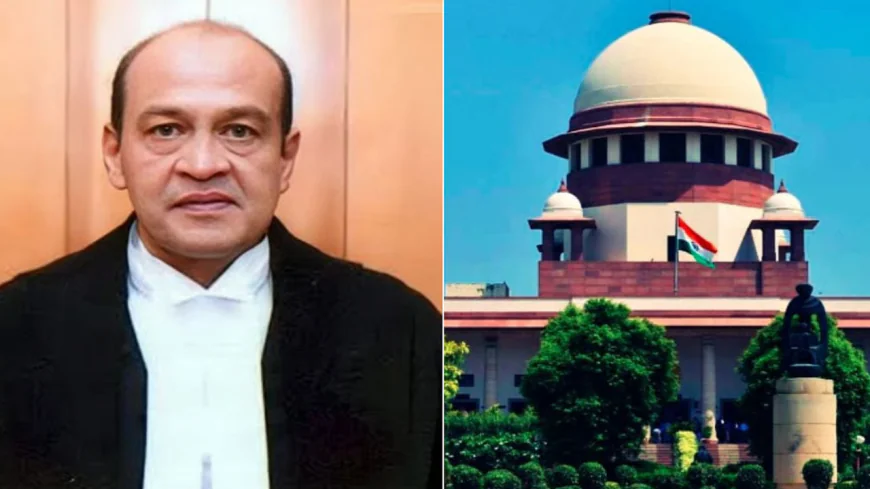
The Supreme Court, in an act that had a constitutional seriousness, on January 16, 2026, strongly declined a petition made by Justice Yashwant Varma declining to stop the impeachment-related actions brought against him. By issuing a judgement that concerned a panel of Justices Dipankar Datta and Satish Chandra Sharma, the courts have sent a good signal throughout the Indian institutional environment: accountability of the judiciary cannot be thwarted on technical grounds when the Parliament is acting within the law.
Article 32 was the one on the impeachment process and Justice Varma had approached the apex court claiming that the very impeachment process was faulty in law. The crux of his challenge was a procedural issue, i.e. whether the Speaker of the Lok Sabha had acted unilaterally and in violation of the law by effectively constituting an inquiry committee even before the Rajya Sabha could take any action upon a similar motion. The Supreme Court was however categorical. It decided that there was no legality, no constitutional violation, and that the court should not intervene on this step.
The Legal Battle: A Question of Procedure, Not Power
The Proviso to Section 3(2) of the Judges (Inquiry) Act, 1968 was the focus of the plea made by Justice Varma. His point was emotionally coloured and legally accurate. As the impeachment motions were proposed in both the Lok Sabha and the Rajya Sabha on the same day he argued that the law also required a joint inquiry committee to be formed where the Speaker of the Lok Sabha and the Chairman of the Rajya Sabha had to be consulted. He also argued that the Lok Sabha Speaker had been unilateral and untimely going against the procedure required. The whole process of inquiry was therefore vitiated in his opinion since the motion in the Rajya sabha was later thrown out. This argument was broken down one after another by the Supreme Court.
Why the Supreme Court Said “No”
The court of law, the bench, made a critical legal distinction, namely introduction of a motion is not equal to admission. According to the judges, the Lok Sabha Speaker allowed the impeachment motion but the Rajya Sabha Deputy Chairman dismissed the motion at the very outset describing it as defective and not in order. And this fact alone was fatal.
The Court decided that joint consultation will only occur when both Houses actually put impeachment motions on the record, and not just introduced. The Lok Sabha Speaker had the full powers to act unhindered and form the inquiry committee since the Rajya Sabha motion never passed through the admissibility test. Based on this argument, the Court did not find procedural illegality, breach of the Judges (Inquiry) Act and constitutional inadequacy, which would justify the intervention. Emotionally striking with the courtroom was a higher judicial feeling, that courts should not hinder Parliament when a constitutional process has been initiated.
The Constitutional Design: Parliament at the Core
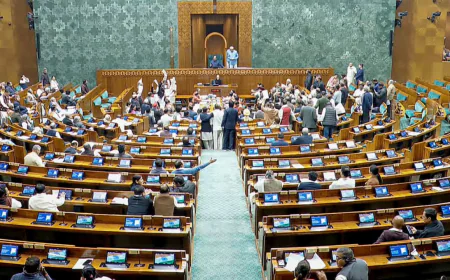
The decision confirmed the constitutional basis of the removal of judges, which is based on articles 124(4), 124(5) and 217 and was applied to the High Court judges under Article 218. It is actively rigorous, and is aimed to safeguard judicial autonomy and to provide accountability on account of demonstrated misbehaviour or incapacity. At the centre stage is parliament. An impeachment motion should be supported by 100 Lok Sabha MPs or 50 Rajya Sabha MPs who are present and who are investigated by a three-member committee, including senior judges, and passed by a two-thirds special majority in the two Houses during the same session. At this point, only the President of India signs the removal order. The Court pointed out that the judiciary is not obstructive but investigative and supervisory.
Separation of Powers: The Unspoken Guardian
The doctrine of separation of powers was powerful and underlining the verdict. The Supreme Court placed great reliance on Article 122 which protects the proceedings of the parliament against judicial reviews due to procedural irregularity. The point was obvious and modest, the courts must not interfere in political or procedural conflict in the kingdom of Parliament, except in situations of overt constitutional illegality. Such judicial restraint is not part of the infirmity of a weak character--it is legal sanity.
Precedents and the Varma Case’s Place in History
The Court has introduced its approach, which is consistent with such previous precedents as Sarojini Ramaswami v. The case of Union of India (1992) where it was allowed that the judicial review of the case was to provide procedural fairness, but not to paralyse Parliament. There were other cases of similar restraint with the Justice Soumitra Sen impeachment (2011) and the Dipak Misra motion (2018). The case of Justice Varma fits this tradition perfectly well. The Court recognised that it may conduct a review of procedure, listened to the plea in detail, but finally determined that the law was observed.
Accountability Without Fear, Independence Without Immunity
The symbolic meaning of the verdict, perhaps, is the most emotional part of it. This ruling supported the Court in affirming the in-house inquiry system of the judiciary as just and constitutional as judges have to be accountable to conduct standards. Meanwhile, it guaranteed judicial independence through insisting on the strict adherence to due process and high removal standards. One thing that is quite evident in the ruling is that independence is not impunity, and accountability is not intimidation.
What This Means Going Forward
To future judges caught in the impeachment, the way forward is narrower and clearer. The lawsuits will only be successful when a concrete violation of the constitution or law is observed, and the challenge is made timely and backed up by law, and not by tactic, tact, and technicality. The country has its eyes on this, not as a case, but as the Constitution. This is not just a verdict. It is the reestablishment of the democratic equilibrium.