



























India-US interim trade agreement Sparks Nationwide Bharatiya Kisan Union protest Ahead of Bharat Bandh
The India-US interim trade agreement has sparked a massive Bharatiya Kisan Union protest, with Rakesh Tikait and farmer groups opposing tariff cuts, GMO imports, and dairy sector exposure ahead of Bharat Bandh February 12, 2026.

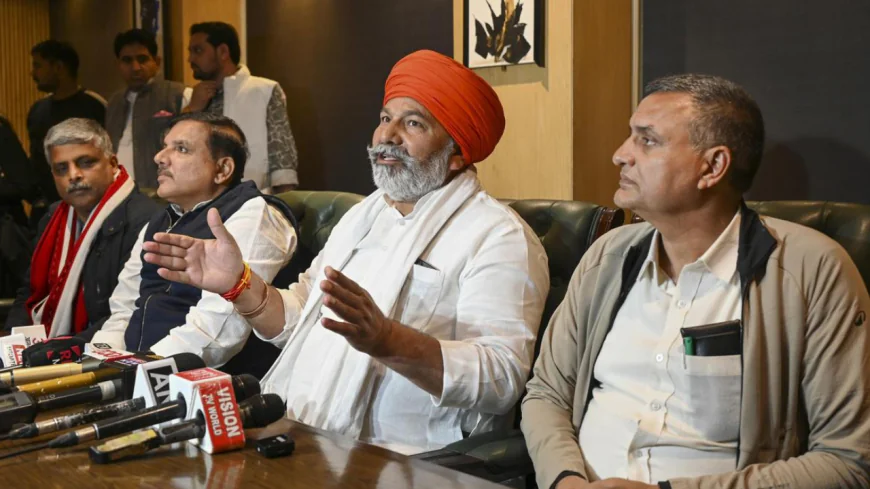
The announcement of the India-US interim trade agreement in early February 2026 has triggered a massive Bharatiya Kisan Union protest across rural India. Farmer unions spearheaded by the Bharatiya Kisan Union and supported by the Samyukta Kisan Morcha. Farmers make claims that the trade agreement puts at risk the local industry of agriculture and dairy. The deal was declared during the first week of February 2026. In Uttar Pradesh, Haryana, Punjab and other developmentally backward states in villages. Why the outrage? According to the leaders the deal is said to favour the U.S. corporations at the expense of the Indian farmers and is said to be economically dangerous and politically unilateral.
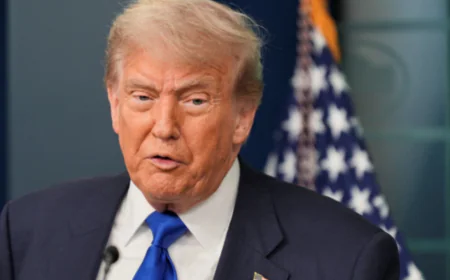
Prominent farm leader Rakesh Tikait has urged villagers to burn effigies of Prime Minister Narendra Modi and U.S. President Donald Trump, intensifying the Bharatiya Kisan Union protest against what they describe as a “death sentence” embedded in the India-US interim trade agreement.
Fears of Import of Subsidised Goods and Market Collapse
The central criticism of the India-US interim trade agreement revolves around tariff reductions and removal of non-tariff barriers on key U.S. agricultural exports such as soybean oil, red sorghum, and dried distillers’ grains. The farmers claim that with these American products highly subsidised, it will penetrate the Indian markets at reduced prices thus crushing the local farmers. The Bharatiya Kisan Union protest highlights that Indian farmers, who already struggle with rising input costs and climate variability, cannot compete with U.S. federal subsidies that support large-scale agribusinesses.
Looking at the economic impact critically, analysts have highlighted that trade liberalisation is likely to lower short term consumer prices, whereas it is likely to cause decline in domestic production in the long term. If procurement prices fall sharply due to the India-US interim trade agreement, small and marginal farmers may exit cultivation entirely. This structural risk has become a rallying point in the Bharatiya Kisan Union protest, which frames the deal as asymmetrical and strategically flawed.

GMO Concerns and Dairy Sector Aggravate Opposition
Another flashpoint in the India-US interim trade agreement is the perceived threat to India’s dairy industry. According to Farmer unions, the opening of the dairy market is against previous promises that agriculture and dairy were not a subject of negotiation. The Bharatiya Kisan Union protest has repeatedly emphasised that India’s dairy sector is decentralised, cooperative-driven, and livelihood-based—unlike the corporate-dominated U.S. model.
Also, BKU executives are accusing of the fact that liberalising restrictions would open the door to the importation of genetically modified crops. Critics question whether biosafety and seed sovereignty safeguards are being diluted under the India-US interim trade agreement. The Bharatiya Kisan Union protest links this issue with broader apprehensions surrounding the Seeds Bill and Pesticide Management Bill, arguing that policy convergence may weaken farmer autonomy over time.
Tariff Inequality, Political Aftermath and Bharat Bandh
Beyond agriculture, critics argue that the India-US interim trade agreement reflects tariff imbalance. It is reported that even as India is reducing the tariffs on U.S. industrial and agricultural products, the U.S has marked 18 percent reciprocity tariff on some of the Indian products like textiles. This disparity has strengthened the narrative within the Bharatiya Kisan Union protest that the deal represents strategic concession rather than mutual benefit.
The protests are escalating. The effigy burnings at the village level are being coordinated across the country and the support of farmer groups to the February 12, 2026 General Strike and Bharat Bandh. The commerce Minister Piyush Goyal has even been forced by some of the organisations to resign on grounds that the government is sacrificing the national interests of agriculture. Within the political economy debate, the India-US interim trade agreement is increasingly portrayed by protestors as part of a wider policy shift favouring global capital, a perception fuelling the expanding Bharatiya Kisan Union protest.
The unfolding backlash against the India-US interim trade agreement demonstrates the deep structural anxieties within India’s agrarian economy. From fears of subsidised imports and dairy sector disruption to concerns over GMO access and tariff imbalance, the controversy has transformed into a broad-based Bharatiya Kisan Union protest that questions not only trade policy but the direction of agricultural reform itself. Whether this trade deal is a point of departure into growth- or a point of flashpoint into years of rural turmoil will depend on whether the government will consult with the stakeholders or it will carry on with the implementation.