































PM Modi to Flag Off India’s First Full RRTS, Launch Meerut Metro in ₹12,930 Crore Push
PM Modi inaugurates India’s first fully operational Delhi–Meerut RRTS and launches Meerut Metro, cutting travel time to 55 minutes.

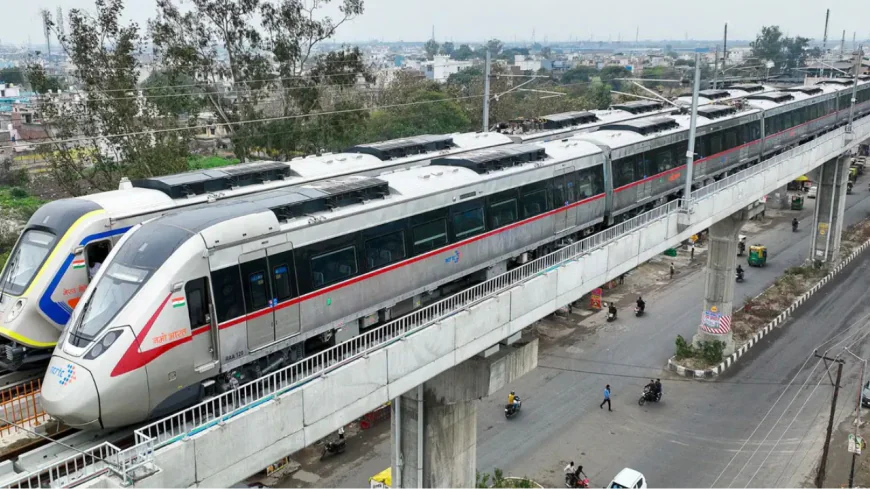
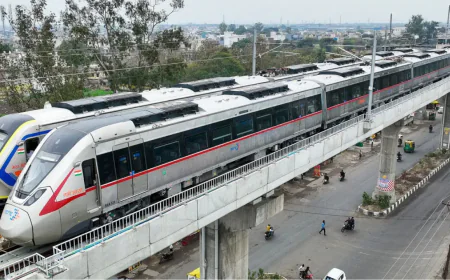
Prime Minister Narendra Modi will open the entire 82km long Delhi-Ghaziabad-Meerut Namo Bharat corridor and launch the Meerut Metro at the Shatabdi Nagar station today at 12.30 PM. The Chief Minister of Uttar Pradesh, Yogi Adityanath, will accompany him and they will have a ride in a metro to Meerut South. It is a project in which India has the fastest metro with a speed of 120 kmph and incorporates RRTS and metro services over the same infrastructure. PM Modi will also inaugurate and lay foundation stones on the project worth 12,930 crore and will hold a rally in Mohiuddinpur. It is estimated that the corridor will take 55 minutes to travel between Delhi and Meerut.
The First Fully Operational RRTS Corridor in India goes live
The inauguration of the Indian urban transport is a milestone in the history of transport in India. After the Delhi-Ghaziabad-Meerut 82 km long corridor is completed, the Namo Bharat RRTS will be the first fully operational regional rapid transit system in the country. Others being newly opened are 5km long stretch between Sarai Kale Khan and New Ashok Nagar in Delhi and a 21km long stretch between Meerut South and Modipuram in Uttar Pradesh.
This unified system will help in minimising the congestion and increase the intercity connectivity. The corridor transforms the commuting habits as it cuts down the travel duration between India and Meerut to about 55 minutes. The RRTS has high-speed, high-frequency services and modern infrastructure standards unlike other traditional rail upgrades. This project will strategically make Meerut an extension of the economic zone of the National Capital Region and not a peripheral city.

Meerut Metro records a 120 Kmph speed record
The Meerut Metro is the fastest metro in India and it reaches a speed of 120 kmph. Its 23km Phase-1 line will be travelling at almost 30 minutes, and will create a great impact on traffic in the city. The metro has common infrastructure with the Namo Bharat RRTS- it is an Indian first model.
The joint corridors maximise utilisation and minimise redundancy in investment which is an integrated planning strategy. There will be a need to have an accurate schedule and sophisticated signalling systems to ensure operational coordination between two services on common tracks; however. When implemented properly, this model may serve as the prototype of other developing urban clusters.
Other than speed, the project is an indication of transition to transit-based development. With the faster connexion, real estate development, industrial growth and labour mobility are likely to be triggered in western Uttar Pradesh.
Development Push Signals Political and Economic Intent 12,930 Crore
Other than transport infrastructure, PM Modi will lay foundation stones and inaugurate projects in Meerut estimated to be 12,930 crore. The tour will also involve a speech at the public in Mohiuddinpur, which highlights the political importance of the occasion. This massive investment is a signal of two things infrastructure modernization and electoral signalling. Integrated transport corridors tend to transform the economic geography, as it lures investment and in addition, it decentralises urban pressure of megacities.
However, the long-term performance will be determined by the affordability, sustainability of ridership and efficiency of the maintenance. Last-mile connectivity and urban planning reforms are the only way to achieve success in high-speed infrastructure projects. The Delhi Delhi-Meerut RRTS and Metro interlinkage is a bold experiment in the field of regional transit engineering - its ultimate success will be gauged by the number of people who are commuting and the economic spillover benefits.