






















Narendra Modi Tarique Rahman Call After BNP Landslide Marks New Chapter in India-Bangladesh Relations
Narendra Modi Tarique Rahman call follows Bangladesh Nationalist Party election victory 2026, as India reaffirms support for democratic Bangladesh after BNP’s landslide win.

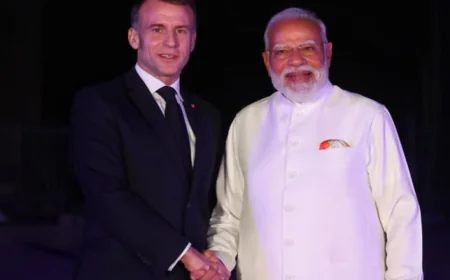
The Narendra Modi Tarique Rahman call on 13 February 2026 has drawn regional attention following the sweeping Bangladesh Nationalist Party election victory 2026 in the 13th National Parliament polls. Who was involved? Narendra Modi, Indian prime minister and BNP acting chairman Tarique Rahman. What happened? PM Modi praised Rahman after his landslide victory in the party. When did this occur? On 12 February 2026, a day following the general election in Bangladesh. Where does it matter most? Through the changing Indian-Bangladesh diplomatic relations. Why is it significant? Because the Narendra Modi Tarique Rahman call signals India’s readiness to work with the new leadership formed after the Bangladesh Nationalist Party election victory 2026. The growth is based on historic results of the election in which the Bangladesh Nationalist Party won a resounding mandate that changed the political direction of Bangladesh.
Diplomatic Outreach After the Bangladesh Nationalist Party Election Victory 2026
In a public message posted on X, PM Modi stated he was “delighted” during the Narendra Modi Tarique Rahman call, reaffirming India’s commitment to peace, progress, and prosperity in the region. The tone of the conversation reflected diplomatic continuity despite political transition triggered by the Bangladesh Nationalist Party election victory 2026.
India underlined the historical, cultural, and economic roots of the two countries. Observers note that the Narendra Modi Tarique Rahman call serves both symbolic and strategic purposes, ensuring stability after the Bangladesh Nationalist Party election victory 2026. Considering the geopolitical sensitivity of South Asia, early involvement decreases uncertainty and alleviates the concern of investors and other stakeholders in the region. Rahman, whose 17 years of self-imposed exile in London were over, is now ready to take office as Prime Minister. The electoral mandate behind the Bangladesh Nationalist Party election victory 2026—212 of 299 seats contested—provides him with a strong parliamentary majority, making the Narendra Modi Tarique Rahman call an early diplomatic bridge-building step.

Democratic Mandates and Political Transition
In February 2026, the first vote to the parliament was conducted in the general election on 12 February 2026 since the overthrow of Sheikh Hasina in August 2024. With a voter turnout of 59.44%, the Bangladesh Nationalist Party election victory 2026 reflects a significant democratic shift. During the Narendra Modi Tarique Rahman call, India reiterated its support for a democratic, progressive, and inclusive Bangladesh.
A constitutional referendum was carried out along with the voting in parliament and the proposed reforms were voted by YES. Analysts argue that the scale of the Bangladesh Nationalist Party election victory 2026 strengthens Rahman’s political legitimacy both domestically and internationally. The Narendra Modi Tarique Rahman call thus aligns India diplomatically with the electorate’s verdict rather than a particular ideological bloc.
More importantly, this shift would restructure the systems of cooperation in a region in terms of trade, border, and connectivity initiatives. The Bangladesh Nationalist Party election victory 2026 opens room for recalibration, while the Narendra Modi Tarique Rahman call demonstrates India’s pragmatic foreign policy approach.
Bi-Lateral Relations and Future Prospects
Following the Narendra Modi Tarique Rahman call, BNP officials publicly thanked the Indian Prime Minister for recognising the people’s mandate. Party representatives expressed optimism that the Bangladesh Nationalist Party election victory 2026 would usher in renewed bilateral cooperation. In Indian terms, it is strategically important to have good relations with Dhaka to promote the region security, economic integration and counter extremism efforts. The Narendra Modi Tarique Rahman call underscores India’s willingness to collaborate on shared development goals such as infrastructure connectivity, energy cooperation, and trade facilitation. Rahman should assume office of Prime Minister on 14 February 2026. The decisive nature of the Bangladesh Nationalist Party election victory 2026 provides political stability, while the Narendra Modi Tarique Rahman call sets the diplomatic tone for the next phase of India-Bangladesh engagement.The Narendra Modi Tarique Rahman call following the Bangladesh Nationalist Party election victory 2026 represents more than a congratulatory exchange—it signals a recalibrated regional partnership after a major political transition in Dhaka. As Bangladesh prepares for a new government under Tarique Rahman, India’s early outreach highlights its strategic commitment to a democratic and prosperous neighbour, reinforcing the broader diplomatic significance of the Narendra Modi Tarique Rahman call in South Asian geopolitics.