



























Modi Positions India as Global South’s AI Voice at Landmark India AI Impact Summit 2026
PM Modi positions India as Global South’s AI leader at India AI Impact Summit 2026, attracting $100–$200 billion in investment commitments.

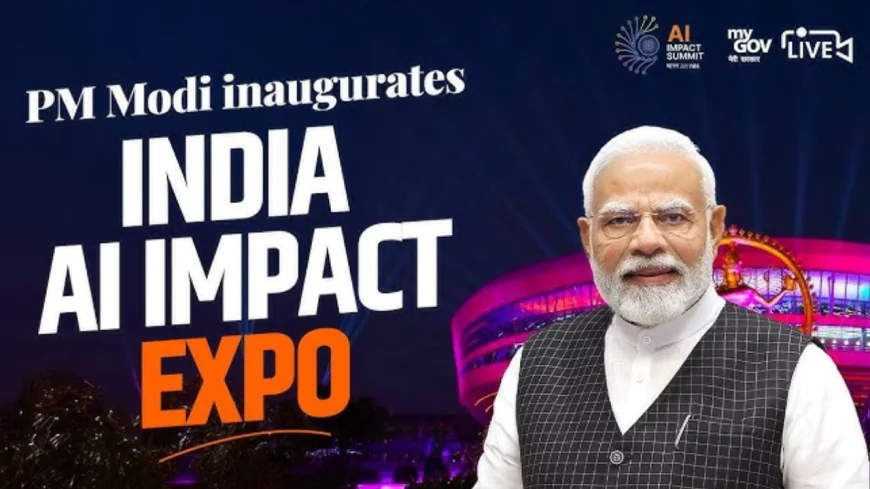
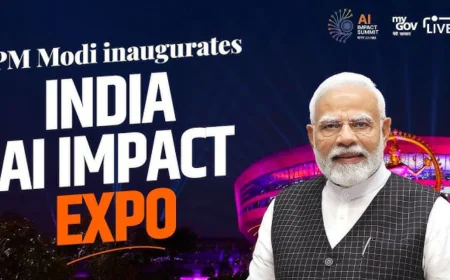
In New Delhi, the India AI Impact Summit 2026 came to an end with the Prime Minister Narendra Modi envisioning India as the hub of the Global South in AI. The event was held at Bharat Mandapam between February 16 and 20, and attracted world leaders such as Sundar Pichai, Sam Altman, Dario Amodei, and Bill Gates as well as Indian industry leaders Mukesh Ambani and Nandan Nilekani. The conference focused more on applied artificial intelligence than on existential risks, and will draw in investments valued at 100-200 billion dollars. Google emphasised its 15 billion AI data centre in Visakhapatnam. The expo included 600 start up companies and 13 country pavilions in 70,000 square metres.
Risk to Application: India Rebrands AI
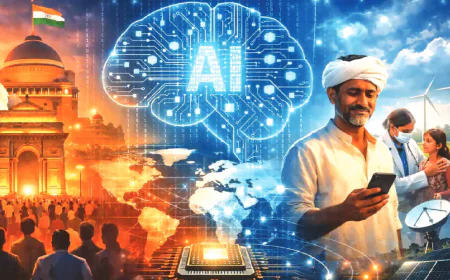
In contrast to the previous AI conferences held in Western capitals that focused on existential threats, the India AI Impact Summit shifted the focus of the storey to developmental applications. The event, which was organised based on the Three Sutras- People, Planet, and Progress, highlighted the importance of AI in the delivery of healthcare, optimization of agriculture, and access to multilingualism.
The message of Prime Minister Modi focused on equal access and not something on technological leadership. India suggested shared compute and data resources and datasets to developing countries by promoting so-called AI Commons, which disrupts the concentration of AI infrastructure in the hands of a few global superpowers. Such repositioning of India as a mediator and innovator makes it a strategic move. The country is not just competing on the supremacy of the frontier models but is carving out influence by the governance structures and the implemented influence. The question of whether this vision is workable into enforceable global norms is yet to be put to test, but, in diplomatic terms, the summit is a notable change in AI geopolitics.

Presence of a Billionaire Is an Indicator of Investment Workforce
Its international relevance was enhanced by the fact that the summit was attended by high-profile people. CEOs like Sundar Pichai (Google), Sam Altman (OpenAI), and Dario Amodei (Anthropic) were in the company of philanthropist Bill Gates and Indian industrialists Mukesh Ambani and Nandan Nilekani.
They have estimated investment commitments ranging between 100 billion dollars to 200 billion dollars that is a significant confidence of the private sector. The marquee commitment of Google can be identified as the announcement of 1GW, a 15 billion AI data centre hub in Visakhapatnam.
Nevertheless, headline numbers need to be questioned. Depending on the stability of policy and readiness of infrastructure, investment promises can be in the form of a multi-year timeframe. India will have the challenge of transforming the memorandums and intent statements into functioning facilities, talent pipelines and quantifiable economic returns. The energy of an investor has to be corresponding to the ability to execute and prevent overextension.
Exposure Scale and Public Participation Expand
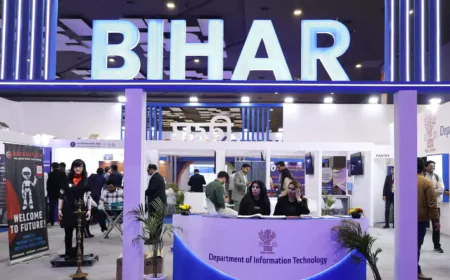
Other than a policy discourse, the India AI Impact Expo featured more than 600 startups and 13 country pavilions on 70,000 square metres. The scale brings to the fore the desire of India to combine grass-root development and international relationships. The expo which was initially limited to opening day was later extended to February 21 due to people demand. This is an indication of increasing societal involvement with AI as an opportunity and disruption.
The organisers indicated that AI governance could not be a preserve of elite platforms by allowing citizens to participate in the event. However, democratisation cannot be achieved through mere exhibition space, but it needs skills and technological literacy and regulation. The legacy of the summit will not be limited to world optics but on whether India has been able to institutionalise inclusive AI development and balance it with the principles of competitive, ethical, and sustainability.