






























From Waste to Worth: IIM Shillong Students Build Furniture from 100 Kg Plastic
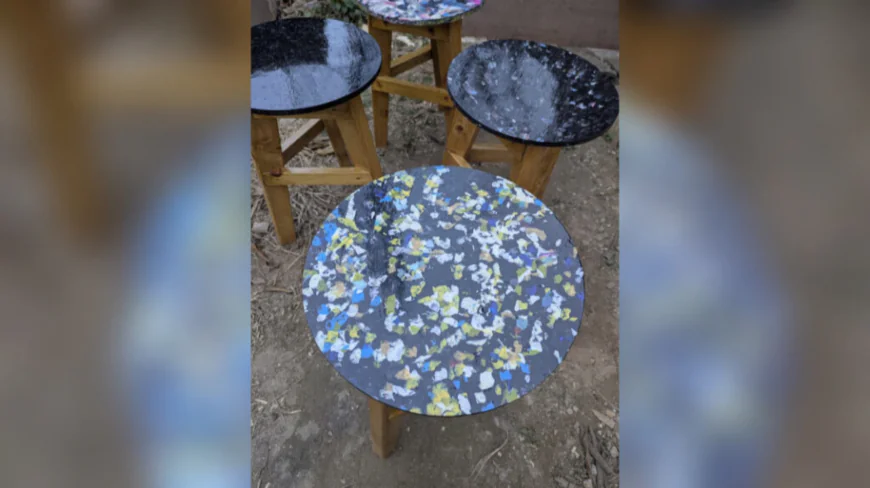
Students at the Indian Institute of Management Shillong have transformed nearly 100 kilograms of discarded plastic into functional campus furniture. The initiative reflects the institute’s growing focus on sustainability, hands on learning and community driven environmental responsibility.

A Classroom Lesson Beyond Books
At the serene hill campus of the Indian Institute of Management Shillong, sustainability is not just a topic discussed in lecture halls. It is being practised on the ground. A group of students recently collected and repurposed nearly 100 kilograms of plastic waste generated within and around the campus. Instead of sending the waste to landfills, they decided to turn it into something meaningful and lasting.
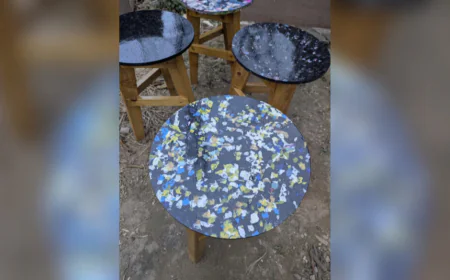
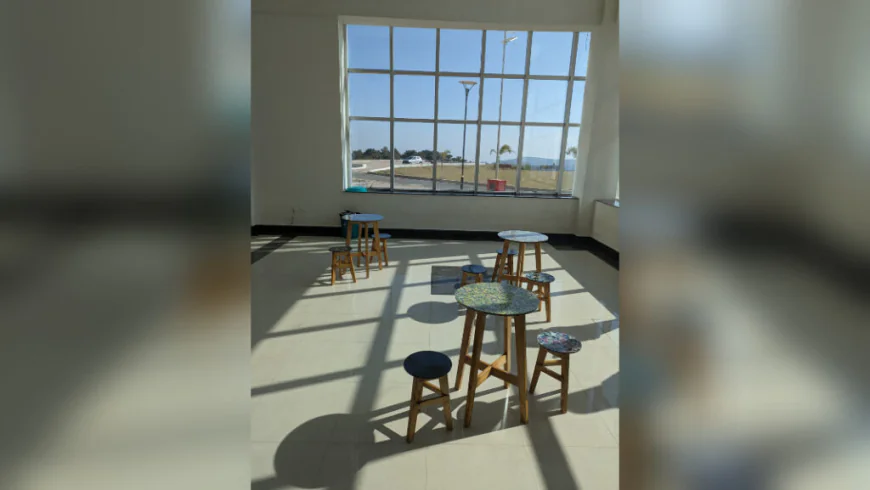
The result is sturdy and practical furniture pieces now placed across the campus. What was once considered waste has found a new identity as benches and seating units used daily by students and faculty.
The Idea That Sparked Change
The project began with a simple observation. Despite regular waste collection, plastic bottles, packaging materials and wrappers continued to pile up. The students realised that awareness alone was not enough. They needed action.
Working together, they sorted the collected plastic, cleaned it and collaborated with local recyclers and experts to process it into reusable boards. These boards were then shaped into furniture designed specifically for campus needs. The initiative required planning, coordination and a fair amount of physical effort, making it a true team driven effort.
Sustainability in Action
This project highlights a larger shift in how management education is evolving. At IIM Shillong, students are encouraged to think beyond profit and consider environmental and social impact. By turning plastic waste into furniture, they demonstrated how innovation can solve everyday problems in practical ways.
The initiative also reduces the campus carbon footprint. Reusing plastic locally cuts down transportation and landfill dependency. More importantly, it sends a strong message that sustainable choices are achievable when communities work together.
Inspiring a Wider Movement
The effort has sparked conversations across the campus. Students from other batches have expressed interest in expanding the project to include more recycled materials. Faculty members have praised the initiative as a real life case study in responsible leadership.
What makes this story powerful is its simplicity. It did not require massive funding or advanced technology. It required awareness, commitment and teamwork. In transforming 100 kilograms of plastic into something useful, the students have shown that meaningful change often begins with small, determined steps.