







































NASA Sets March 6 Launch for Artemis II, First Crewed Moon Mission in 50 Years
NASA sets March 6, 2026, as target for Artemis II, the first crewed Moon mission in 50 years, testing Orion systems ahead of Artemis III lunar landing.


The earliest date by which NASA expects to launch Artemis II is March 6, 2026, the first crewed mission to the moon since Apollo as of March 6, 2026. The hundred-day expedition will have four astronauts, Reid Wiseman, Victor Glover, Christina Koch, and Jeremy Hansen onboard the Orion spacecraft Integrity, which will be propelled by the Space Launch System rocket to orbit the Moon. The decision comes after a successful wet dress rehearsal on February 19 that fixed the previous problems regarding hydrogen leaks. The mission will be used to test the life-support systems before Artemis III lands on the moon in 2028. The official go ahead to launch will be in a Final Flight Readiness Review later this month.
Seasoned Re-entry into Lunar Space in 50 Years
The Artemis II mission by NASA is a milestone in the history of space exploration by humans. Since the Apollo period, a crewed vessel had not visited the area of the Moon. The mission is scheduled to take off on March 6, 2026, at about 8:29 PM EST at the Kennedy Space Centre in Florida. The 10 day trip would orbit astronauts around the back of the Moon and safely back to the earth. It is not a landing mission but a systems validation flight of vital significance to the Orion spacecraft and Space Launch System (SLS). It will guarantee the safety of the crew prior to a planned lunar surface mission on Artemis III in 2028.
The announcement came after a successful wet dress rehearsal on February 19 that had established the various liquid hydrogen leaks that had proved to be a significant technological challenge. Flight Readiness Review will be the last review that will establish whether all the systems have met operational standards prior to the official launch authorization.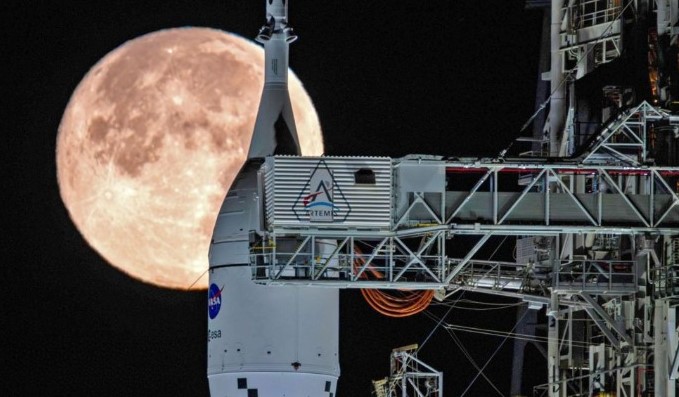
Varying Crew Heralds a New Space Age
The four-member crew of Artemis II demonstrates that NASA has a shifting diversity policy and the desire to cooperate internationally. The mission will be headed by Commander Reid Wiseman and Pilot Victor Glover who will make Glover the first person of colour to leave the low Earth orbit. Mission Specialist Christina Koch will become the first female to travel beyond the immediate orbit of the earth.
Also with them is Jeremy Hansen of the Canadian Space agency, the first non-American to travel to the moon orbit. This multinational representation itself indicates that there is a strategic move away towards competition in Cold War to collaborative exploration.
The Integrity spacecraft will also be the habitat and transport module of the crew. Its life support and navigation systems would be real time tested throughout the mission, and making Artemis II a significant technological and symbolic advance toward a long-term lunar exploration.
Artemis III and Beyond Testing
Operational verification is the aim of Artemis II. As compared to the uncrewed Artemis I mission, this flight will evaluate the life-support, communication and deep-space navigation systems on the Orion with astronauts in board. Before being committed to a lunar landing mission, it is necessary to ensure that the situation is reliable in the real conditions. The next one is Artemis III, which is scheduled at least in 2028, and which will bring people back to the surface of the Moon. Artemis II thus plays the role of a transitional step between experimentation and implementation.
The mission schedule however is still subject to the NASA Flight Readiness Review, which is planned to take place in late February. Officials will not permit the final go until extensive safety tests have been completed. Artemis II, should it succeed, will be the official start of a new phase of deep-space and lunar exploration.