

















President vs Prime Minister in India: Roles, Powers & Authority
Explore the roles of India's President and Prime Minister, including their authority, accountability, selection and function.

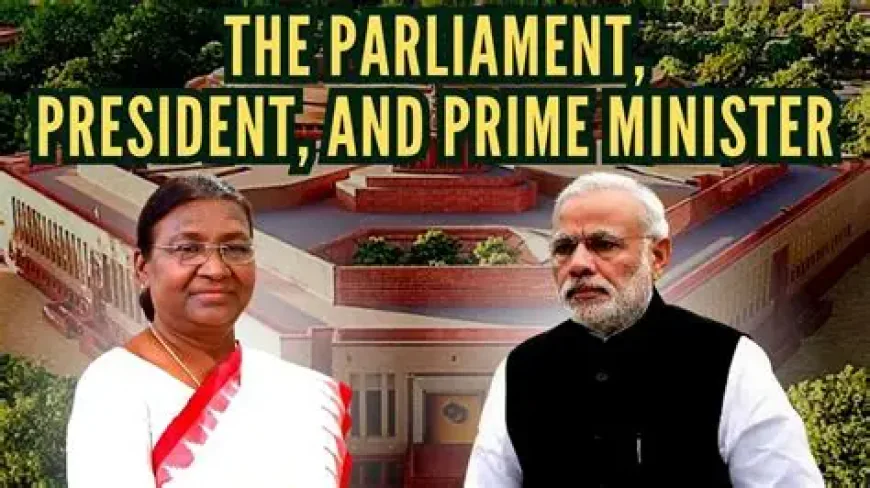
The President vs the Prime Minister in India have contrasting responsibilities with differing levels of authority. All forms of political authority originate from the Constitution, and establishing a clear understanding of how these two positions interact provides clarity about how power is shared and balanced among the executive, legislative and judicial branches of the government.
Constitutional Position and Selection
The Constitution of India describes the President of India as the head of State. The President is not directly elected, but is elected indirectly through the electoral colleges that comprise all elected members of Parliament and State Legislative Assemblies. This system of election in the Republic reflects the federal structure of the country.
The Prime Minister is generally the leader of the largest political party in the Lok Sabha (the lower house of Parliament) or of a coalition of parties. The President appoints the Prime Minister, but in order for the Prime Minister to be able to remain in office, the Prime Minister must maintain a majority in the Lok Sabha.
Nature of Powers
The President serves in mainly a ceremonial capacity, with constitutionally significant roles to play in the functioning of the federal government. Except where the Constitution allows the President to act on their own (i.e., exercising their power to veto or returning legislation for further consideration), most other actions taken by the President are done so at the direction of Prime Minister (PM) and the Council of Ministers, and therefore, the President is dependent on the Prime Minister for advice and assistance in executing their responsibilities as President.
Governance of the country is through the Prime Minister, who is the executive leader of the country. The Prime Minister directs policy-making, oversees administration and ensures the nation’s security and oversees the governance of the economy. The PM's leadership is every member of the Council of Ministers, and the collective responsibility of all members of the Council of Ministers to the Lok Sabha means that the executive is accountable directly to the members of parliament elected by citizens of India.
Roles in Law-Making and Governance
Law-making and governance are roles that both the President vs the Prime Minister in India fill together as part of Parliament to help develop the legislative agenda. Only after obtaining Presidential assent can legislation be enacted. The President has the power to call or prorogue Parliament, give speeches to both houses of Parliament at once, and issue ordinances when Parliament has been prorogued.
The Prime Minister is responsible for the legislative agenda, and he or she is instrumental in setting this agenda by directing the decisions of the cabinet, coordinating with the various ministries, and guiding new government bills through Parliament. The role of the Prime Minister is to shape the policies that govern the nation as a whole.
Emergency Powers
In times of emergency—national, state, or financial—the President formally declares the proclamation. Yet the decision originates from the Union Cabinet, led by the Prime Minister. This illustrates the constitutional design: authority flows through the President, but political power resides with the elected executive.