















Modi, Ishiba Take High-Speed Shinkansen from Tokyo to Sendai: A Symbol of Deepening India–Japan Ties
PM Modi and Japan’s Ishiba ride the Shinkansen to Sendai, highlighting stronger India–Japan ties, tech collaboration, and Indo-Pacific cooperation.

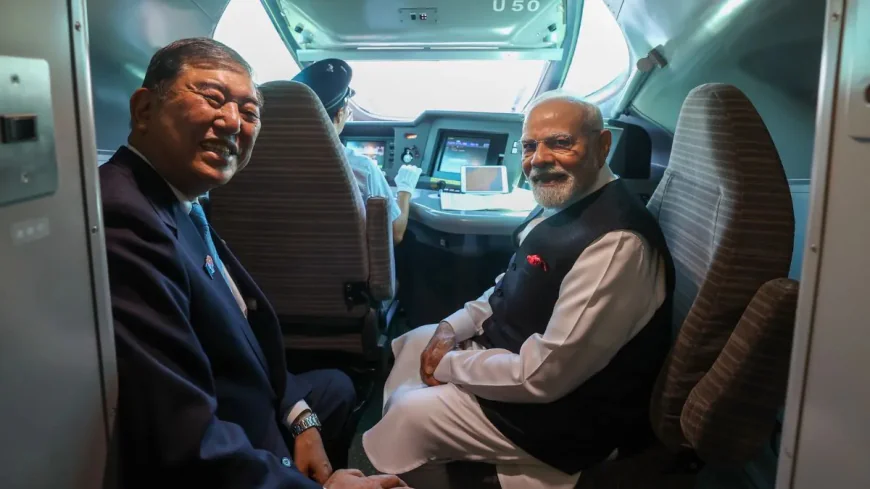
Tokyo, August 30, 2025 – On the second day of his two-day official visit to Japan for the 15th India–Japan Annual Summit, Indian Prime Minister Narendra Modi took the bullet train from Tokyo to Sendai with Japanese Prime Minister Shigeru Ishiba. This showed how closely the two countries are connected strategically and technologically.
Leaders Take a Ride on the Bullet Train
Japanese Prime Minister Ishiba wrote on X (which used to be Twitter), "Going to Sendai with Prime Minister Modi." In the same way as last night, I'm following him from the car. He added to the warmth by writing, "Reached Sendai." Took the Shinkansen to get to this city with PM Ishiba.
Japan's cutting-edge transportation technology was shown off on the important trip. India is also using this technology in its ongoing high-speed train project from Mumbai to Ahmedabad.
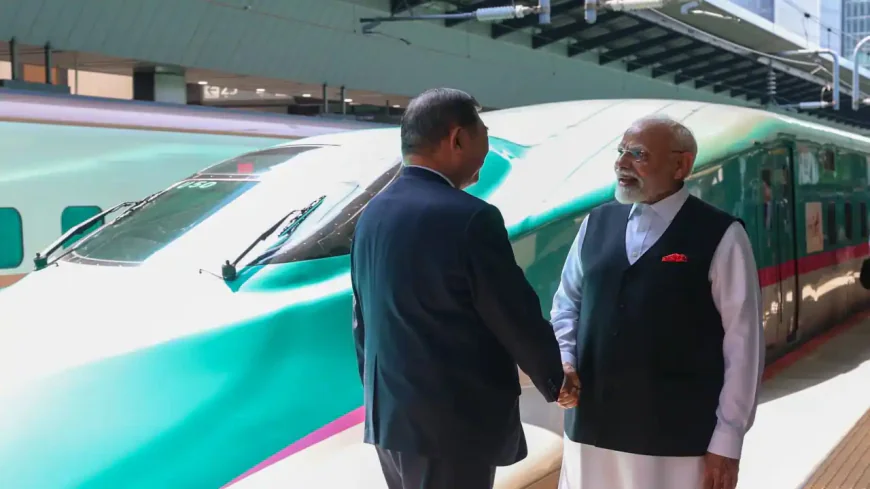
Feeling warm, Hello, Sendai!
As soon as Modi arrived, people from all over the world, including Indian diaspora members, chanted "Modi-san, welcome!" He greeted the crowd with open arms, talking to kids and noticing how excited everyone was.
Pay attention to business and technology
Modi visited several important industry hubs in Sendai, such as a semiconductor plant, a factory that makes bullet train cars, and the Tokyo Electron factory. He also talked to Indian loco-pilots who were training with the East Japan Railway Company (JR East).
Modi visited JR East and saw the futuristic 360 km/h ALFA-X Shinkansen. He was also told by the company's chairman about Japan's progress in train technology.
Getting businesses to work together more
The train ride and summit talks stressed working together more closely. Japan promised to increase private investment in India from about $2.7 billion a year in the 2010s to $6.8 billion a year over the next ten years. They also agreed to make it easier for 500,000 workers and students to move between countries within five years.
Clean energy, space, defence, advanced technology, and security cooperation were all part of the joint goal.
Alignment of Strategies in the Indo-Pacific
Aside from economics, Modi and Ishiba reaffirmed the pledge of their countries to the Quad grouping, which is made up of India, Japan, the US, and Australia. Both leaders talked about how important it was for the Indo-Pacific to be free, open, and based on rules. They also said they were worried about how things were getting worse in the East and South China Seas.
Business Forum and a Look Ahead
"Make in India, Make for the World" was Modi's motto at the India–Japan Business Forum as he encouraged Japanese companies to take advantage of India's skilled workers and business-friendly policies.
After his trip to Japan was over, Modi went to Tianjin, China, to attend the Shanghai Cooperation Organization (SCO) Summit. This showed that India was committed to working with both its Asian allies and its larger Asian relationships.