





















Parliament Budget Session Day 7 Ends in Uproar, Both Houses Adjourned Amid Opposition Protests
Parliament Budget Session 2026 Day 7 ends in chaos as both Houses are adjourned amid opposition protests over trade deal, MP suspensions, and China standoff issues.

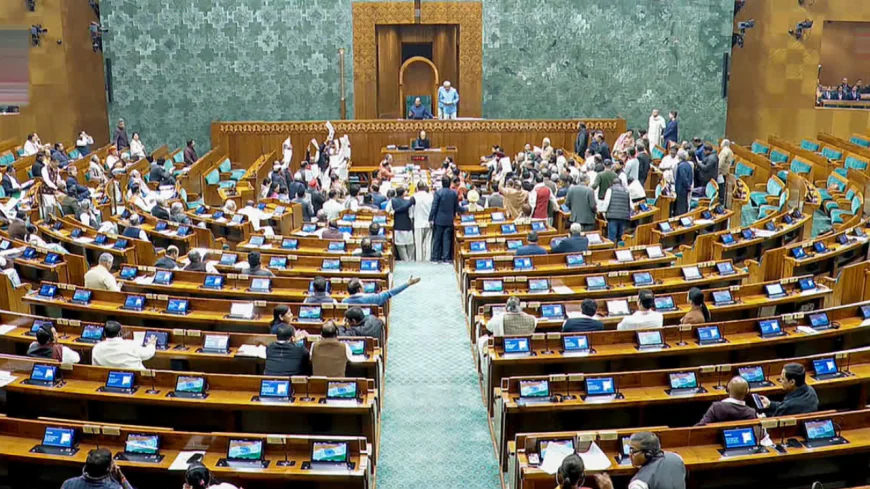
On February 7, 2026, disruptions dominated the Parliament Budget Session. The Lok Sabha and Rajya Sabha adjourned due to intense opposition protests. Lok Sabha members shouted slogans and crowded the well, paralyzing the house. The session suspended three times before closing at 11 a.m. Lok Sabha Speaker Om Birla condemned opposition MPs for breaching parliamentary rules by gathering near the Prime Minister's seat. He had advised Prime Minister Narendra Modi not to attend the session a day earlier, citing intelligence reports of possible protests. The Lok Sabha passed the Motion of Thanks on the President's Address despite the chaos. Prime Minister Modi did not respond, an unusual move. In the Rajya Sabha, Modi replied to the Motion of Thanks, speaking over ongoing sloganeering. The government and opposition are at odds during this crucial Budget Session, and these events escalate the tensions.
Lok Sabha Stalled by Protests
The Lok Sabha made no progress due to opposition protests. Speaker Om Birla told members that invading sensitive areas and sitting near the Prime Minister's seat was unacceptable and disrespected the institution. He had already warned Modi to stay away from the House after receiving intelligence reports, which raised concerns about security and order in Parliament. The Motion of Thanks on the President's Address passed without the Prime Minister's response, breaking tradition. The opposition says this undermines accountability, while the government insists that legislative work must not be disrupted by chaos.

Rajya Sabha: PM's Response Amid Disruption
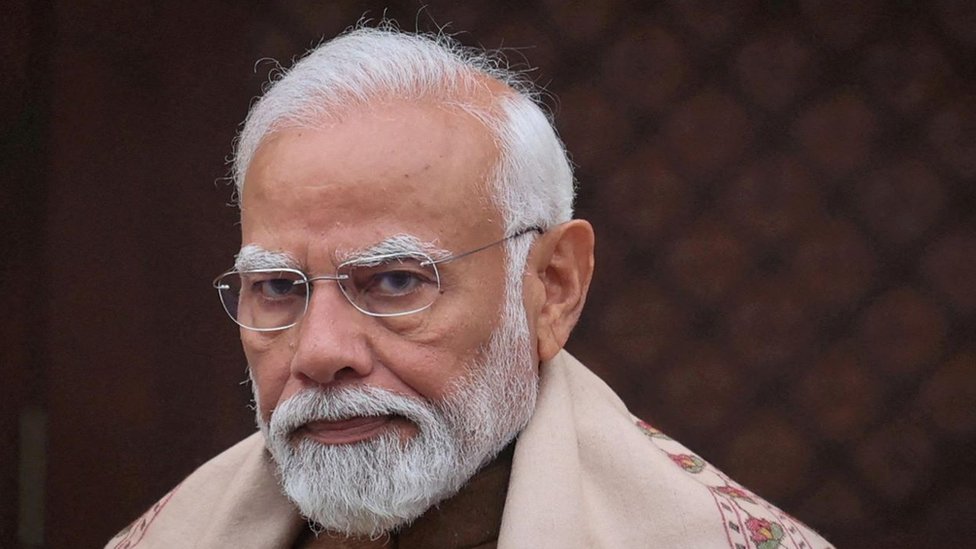
The Rajya Sabha let the Prime Minister respond to the Motion of Thanks, unlike the Lok Sabha, and he seized this opportunity to defend government policies. Opposition members shouted slogans, pushing their demands and refusing to debate. Modi accused the opposition of blocking Parliament during a critical economic period. Government members upheld parliamentary norms by allowing the Prime Minister to speak, despite interruptions. The opposition asserts that hearing the Prime Minister's speech without debate fails to address key concerns about foreign policy, national security, and parliamentary suspensions. The government's actions uphold parliamentary traditions, while the opposition's behavior undermines the debate process.
Protests and Key Demands
The protests centered on three key demands: a thorough examination of the India-U.S. trade agreement, the suspension of eight opposition MPs for misconduct, and clarification on references to the 2020 India-China standoff in former Army Chief General M.M. Naravane's memoir. Opposition leaders insist that these issues compromise sovereignty, parliamentary rights, and national security, and therefore require a full debate. The government asserts that procedural rules must be respected and that disruptions undermine democratic scrutiny. With the Budget Session spanning 30 sittings over 65 days, including a recess from February 13 to March 9 for Standing Committee examinations, consensus must be reached quickly to avoid derailment.