


































Andhra Pradesh Unveils $175 Billion ‘Data City’ in Vizag to Power India’s AI Ambitions
Andhra Pradesh announces $175 billion AI-focused data city in Visakhapatnam, with Google and Reliance-backed investments powering India’s next AI infrastructure hub.

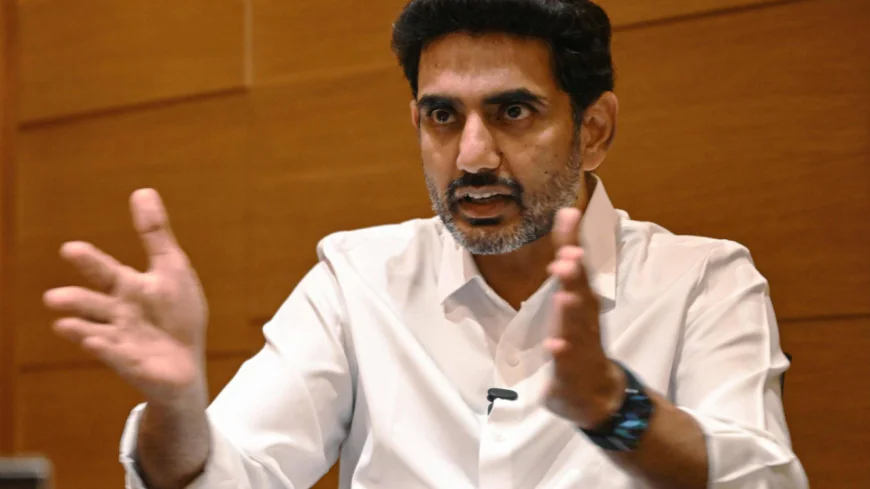
Andhra Pradesh has reportedly declared to build an extensive data city in Visakhapatnam (Vizag) making it a key component of the Indian AI development strategy. The project is led by the IT Minister Nara Lokesh and it is an ambitious project which envisions a 100 km radius industrial ecosystem which is just as wide as Taiwan.
The state government boasts of having concluded an investment deal of around 175 billion dollars in 760 projects. Out of the marquee investments, Google will spend 15 billion to create its biggest AI infrastructure hubs outside the United States. A joint venture between Reliance industries, Brookfield and Digital Realty is also investing $11 billion in a dedicated AI data centre.
In order to support the proposed 6-gigawatt capacity, the state will tap into the proposed nuclear stations at Kovvada and will be using the extra monsoon water to cool the highly sophisticated systems. Such incentives as the land at one US cent per acre are provided to server manufacturers and cooling technology companies.
Vizag is also being positioned to be a key submarine cable landing centre between India and Singapore assuring speedy AI connectivity. This strategic push will be further demonstrated by the India AI Impact Summit on February 1920, 2026.
Bates 175 Billion Bet: Vizag Stands out as AI Capital of India
The data city suggested in Visakhapatnam is a major bid in the technology infrastructure in India. Andhra Pradesh has signed investment deals totalling 175 billion dollars in 760 projects and has the aim of building a concentrated ecosystem of AI and data-processing within a 100-kilometre radius. This scale replicates industrial cluster models around the world, especially the East Asian ones.
The fact that Google spent 15 billion dollars to create its biggest AI centre abroad, not in the United States, is a sign of confidence on the international level. At the same time, a domestic-private sector partnership of up to 11 billion entailing Reliance Industries, Brookfield, and Digital Realty supports domestic-based-industrial investment.
The energy need of 6-gigawatts highlights the scale of the project. The Kovvada-based nuclear energy and the excess monsoon water to be used as cooling are integrated infrastructural thinking. With power security, connectivity, as well as aggressive incentives, Vizag is establishing itself as the gateway of AI manufacturing and data-processing in India.

Planning and Policy Incentives: Developing through Strategic Connections
The coastal setting of Visakhapatnam is key strategic in this endeavour. The city is also being built as a major landing site of submarine internet cables linking India to Singapore, which is a critical consideration when it comes to AI workloads and needs ultra-low latency and high-speed connectivity around the globe.
The incentive plan of the state government is very aggressive. The proposal of land at only one cent per acre of the US market is to entice the global server makers, semiconductor components companies and cooling systems. This represents a cluster-development concept which is based on the industrial growth model of China.
Construction milestones are already going on. The project of the data centre in Sify at Rushikonda IT Park was started in October 2025, and the construction of Google AI campuses will occur between 2026 and 2030. According to policymakers, speed of execution will be the factor to tell whether Vizag can truly compete with AI infrastructure hubs around the world.
Energy, Water & Scale: Is the Mega Vision Deliverable?
Although, the size of the project is ambitious, its sustainability depends on implementation. The intended capacity of 6 gigawatts will be largely reliant on the proposed nuclear power stations at Kovvada that is nonetheless important in the proficiency of uninterrupted provision. Any delay in energy infrastructure may affect the viability of data centres.
The new application of the excess monsoon water in advanced cooling systems solves one of the biggest operational problems of AI infrastructure thermal management. Nevertheless, long term environmental sustainability and regulatory clearances will also play a central role.
The next events include the India AI Impact Summit scheduled in February 2026 that is likely to demonstrate the direction of policy and to draw more pledges. In case it is effective, the data city in Vizag would possibly transform the nature of the digital infrastructure in India. However, the actual challenge of the project will be the balancing of the speed, sustainability, and geopolitical competitiveness in the global race of AI.