






























“No Workplace, No Protection”: SC’s Bold Stance on Political Workers & POSH
The Supreme Court refused the request of the inclusion of female political workers under the POSH Act stating that political parties cannot be considered as workplaces in the legal sense and that the expansion of the law may raise problems.

What is the decision?
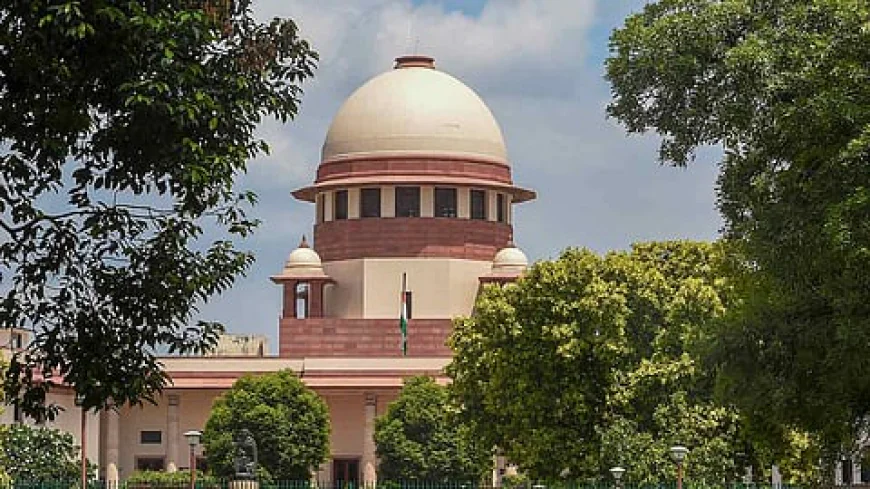
The Supreme Court of India, in a bench led by Chief Justice B.R. Gavai, on this day, declined a petition to bring the workers of a political party into the purview of the Sexual Harassment of Women at Workplace (Prevention, Prohibition and Redressal) Act, 2013 (POSH).
Why was the plea filed?
The petition stated that those women working in political spaces dealing with campaigns, grassroot organizing, or party activities not only face sexual harassment but they also do not have any legal protection because the POSH Act’s safeguards are understood to be applicable only to formal workplaces with a definable employer-employee bond.
Reasoning of the court: Where the line is drawn
The Court was cautious about stretching the term “workplace” to cover off-the-record political activities and said that such an act might “open a Pandora’s box.”
It specifically pointed out that under the POSH law, political parties do not meet the definition of an employer which is the most important condition in the act.
The panel reckoned that this problem is more appropriately solved by the legislators than by the judges.
Reactions & The Consequences
The opinion of the legal experts is divided; some of them support the idea that over-stretching the legal definitions is risky while others consider that it represents a lack of women’s protection in politics.
Without legal protection, activists say that female political figures will continue to be a target particularly in informal setups where internal complaint mechanisms are not there.
Possibly, Parliament might be under the pressure now to either amend the POSH or create the new law which specifically caters to political workers.
What will be the next step?
The petitioner, Yogamaya M.G., has the option to challenge the Kerala High Court decisions or to take another legal course.While waiting, the responsible legislators should take the decision whether the legislation needs to go beyond the already existing areas because of the judgment.
Last Thing:
At the present time, women employees in the political sphere in India are feminine the POSH Act notwithstanding the ruling of the Supreme Court which explicitly defines the legal boundaries, the debate is transferred to the Parliament, public policy, and the likelihood of change in the future.