

































PM Modi Launches Kaziranga Corridor, New Trains to Transform Northeast Connectivity
Kaziranga Elevated Corridor Project promises safer wildlife movement, faster travel, massive job creation, and stronger connectivity across Assam and the Northeast, blending infrastructure growth with environmental conservation.

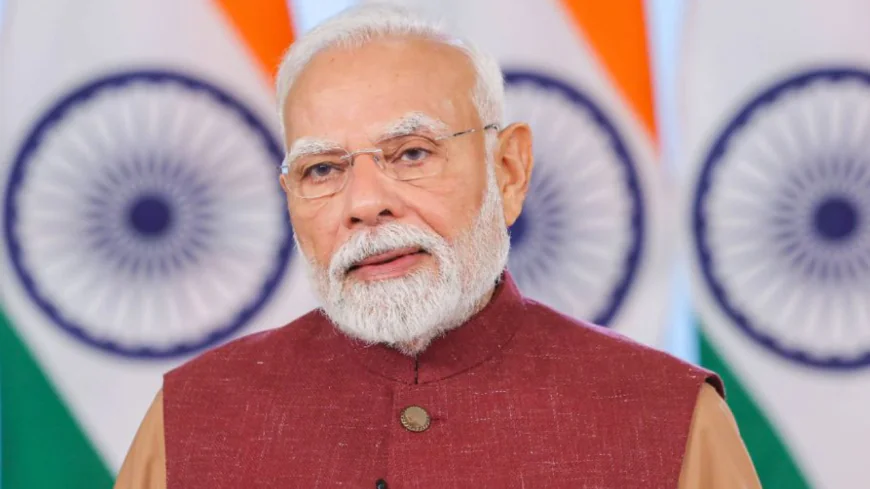
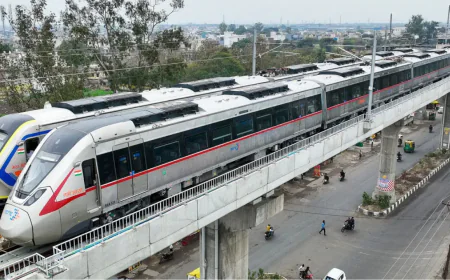
Prime Minister, Narendra Modi, laid the foundation stone of the ambitious Kaziranga Elevated Corridor Project on Sunday, January 18, 2026, and virtually flagged off two new Amrit Bharat Express trains at Kaliabor in the Nagaon district of Assam to give a big impetus to enhance connectivity in the Northeast and to balance with the preservation of the environment. The Kaziranga Elevated Corridor, estimated at 6,950 crore, which is over 86 km approximately on the Kaliabor and Numaligarh stretch of the National Highway-715, is a planned eco-sensitive infrastructural project to safeguard the delicate ecosystem that is the Kaziranga National Park and Tiger Reserve. It is also characterised by the biggest lift of 35km that will enable the free and safe passage of wildlife and particularly during the annual flooding of Assam. Other elements of the project are 21 km of bypasses at Jakhalabandha and Bokakhat to relieve urban congestion as well as road widening to four lanes, which will enhance road safety, travel speed and passenger and freight transport and ecotourism and local jobs. In parallel, PM Modi inaugurated the Guwahati (Kamakhya)-Rohtak and Dibrugarh-Lucknow (Gomti Nagar) Amrit Bharat Express trains and improved the long-distance connectivity of the Northeast and Northern portions of India with contemporary and non-air-conditioned coaches and improved passenger facilities.
To understand the real impact of these announcements beyond their ceremonial launch, it is essential to examine how the projects will function on the ground, whom they will benefit most, and what long-term changes they are expected to bring to the region’s environment, economy, and everyday mobility.
Kaziranga’s Elevated Corridor Becomes a Lifeline for Wildlife During Floods
With doubts about nature-finding a balance with development, the 35-km wildlife corridor, on elevation, cuts through the Kaziranga, is one of the few solutions thereof based on scientific, sensitive, and survivor-based approaches. The elevated highway is built so as to allow the movement of animals in Assam, which is affected by devastating floods in the region every year, and so that a continuous, obstruction-free flow of wildlife can pass to and fro between the submerged grasslands of the Kaziranga national park and the raised Karbi Anglong hills. The current NH-715 served as a death trap over decades, as the traffic accidents used to kill the rhinos, elephants, deer and even tigers on the way in the course of the flood-related migrations. The goal of this project is to put an end to that devastating trend. Unlike the traditional underpasses which only allow animals to cross a small area, the 35km stretch across the ecologically sensitive areas will be on top thus allowing animals to roam freely across the vast areas, as was always the case over the centuries. Noteworthy, the design encompasses all nine of the animal corridors that have been historically identified which means that instinctive migration patterns are locked in and never broken. The project significantly lowers the chances of a vehicle-animal collision, particularly in times of highest floods since movements are the highest at this point, since the project physically isolates the traffic at the top and wildlife at the bottom.

Human interference is also reduced in the corridor. The design has been developed with noise-reduction strategies, controlled lighting, and rigorous pollution management and the construction will be suspended during drastic monsoon seasons to prevent disruption to breeding and migration cycles. This is indicative of a more fundamental change, which is to construct around nature and not with it. The project is based on the existing models of wildlife sensitive infrastructure globally. In India, effective elevated corridors in the Pench and Rajaji Tiger Reserves showed how development and conservation can be achieved together in the presence of expertise. The Kaziranga corridor is based on the recommendations of Wildlife Institute of India, National board of Wildlife and Supreme Court directions, which is much in line with international best practice in biodiversity hot-spots and UNESCO World heritage sites. Intended to be one of the most extensive continuous wildlife-friendly corridors in the world, the project at Kaziranga could easily turn out to be a global standard that movement does not have to be made at the expense of life, and that infrastructure can be developed with humanism to not only ensure the safety of people, but also protect the environment.
Kaziranga Corridor Set to Cut Travel Time, Save Lives, Boost Northeast Economy
The Kaziranga Elevated Corridor Project, once completely functional, should lead to a palpable, quantifiable transformation of daily existence in Assam--altering the movement of people, the survival of wildlife, and the transportation of goods within the Northeast. The effect will be instant to the daily commuters. The time taken to travel between Bokakhat and Jakhalabandha which was formerly reduced by gridlock and restrictions is expected to reduce by only 20 minutes. At a bigger level, the travel time between Guwahati and Upper Assam, such as Jorhat and Sivasagar, is likely to be reduced by at least an hour, which will give relief to the people who have been facing an hour-long delay on the most essential route.
The project is based on safety. The 35km elevated wildlife walkway is engineered to practically abolish any collision between animals and vehicles that has been a tragedy in this highway. More than 85 large animals, such as rhinos and elephants, were killed in this time frame (2021-2025). The corridor is expected to reduce this number to near zero by creating a physical barrier to traffic flow and wildlife movement, particularly during floods, by creating a barrier between the two, with the upper being the traffic movement and the lower being the movement of wildlife. In the case of humans, new bypasses at Jakhalabandha and Bokakhat, as well as four-laning of the highway will decrease the congestion and will considerably decrease the risk of accidents.
The corridor is a game changer to the region in terms of its economy. A quicker, smoother road will enhance freight traffic, enhance the connectivity of the Act East, connect major rail and airports and create new trade, industry, and eco-tourism opportunities- all growth boosters and life-saving.
Kaziranga Corridor Brings Jobs, Hope, and New Livelihoods to Local Communities
The Kaziranga Elevated Corridor Project is not only changing the roads, but it is also changing lives in the state of Assam by creating employment opportunities that are massive and in the long term, the communities residing in and around the renowned national park are benefiting by having long term opportunities with which to live. The project will generate close to 35 lakh person-days of direct and indirect jobs to the region, which is highly required in as far as the economy is concerned. Approximately 15.42 lakh person-days of direct employment will be created during the construction phase only involving local labourers, engineers, technicians and support staff in the construction of the elevated corridor and bypass roads. In line with this, almost 19.19 lakh person-days of indirect jobs will be created under logistics, the supply of materials, transport services, maintenance and related services, and thus guaranteeing thousands of families permanent income.
Other than employment, the project is opening new opportunities to community development. The connection and the special emphasis laid on the protection of wildlife will see a tremendous growth in eco-tourism in and around the UNESCO World Heritage Site of Kaziranga. This increase in tourism will bring new sources of livelihood to the local youth in the form of homestays, guide services, transport operations and handicraft business, and conservation will become a source of revenues.
The new bypasses in Jakhalabandha and Bokakhat will ease the congestion in the towns and access to healthcare, education and markets will be increased. The corridor will interconnect airports, railway stations, tribal districts such as Karbi Anglong, fishing communities, and religious centres, which will bring in inclusive, sustainable development, which will see the growth spread across the entire region.
In the end, the Kaziranga Elevated Corridor stands as more than a landmark infrastructure project; it represents a thoughtful balance between development, conservation, and human progress. By protecting wildlife, reducing travel risks, creating lakhs of jobs, and opening new economic opportunities for local communities, the project reflects a future where growth does not come at the cost of nature or livelihoods. For the people of Assam and the wider Northeast, it promises safer journeys, stronger connectivity, and sustainable prosperity. For the nation, it sets a powerful example: that when infrastructure is planned with empathy and vision, it can protect life, empower communities, and move the country forward together.
PM Vishwakarma Haat 2026 Inaugurated at Dilli Haat to Empower Indian Artisans
PM Vishwakarma Haat 2026 was officially inaugurated January 18, 2026, at Dilli Haat, INA, New Delhi, by union Minister of Micro, Small and Medium Enterprises (MSME), Shri Jitan Ram Manjhi, as a key event to celebrate the richness of India and its artisanal heritage and traditional craftsmanship. Minister of state, MSME, Sushri Shobha Karandlaje was present at the inauguration ceremony together with senior officials and foreign mission representatives. The exhibition was organised under the PM Vishwakarma Scheme in order to offer a special national meeting platform to the artisans and craftspeople in order to sell and maintain the skills they acquired long ago. Over 117 craftsmen representing various regions in the country are taking part in the Haat where traditional crafts and handmade products are on display. The exhibition is planned to be held in the period between January 18 and January 31, 2026; however, the exhibition will be available to the audience throughout every day between 10:30 AM and 10:00 PM. The theme, Vishwakarma Ka Abhiyaan, Viksit Bharat Ka Nirman, is an indication of the government's efforts to empower the artisans, enhance MSMEs, and the richness of Indian culture.