


































“Across the Board From a Legend: Why D Gukesh Says Facing Anand Feels Divine”
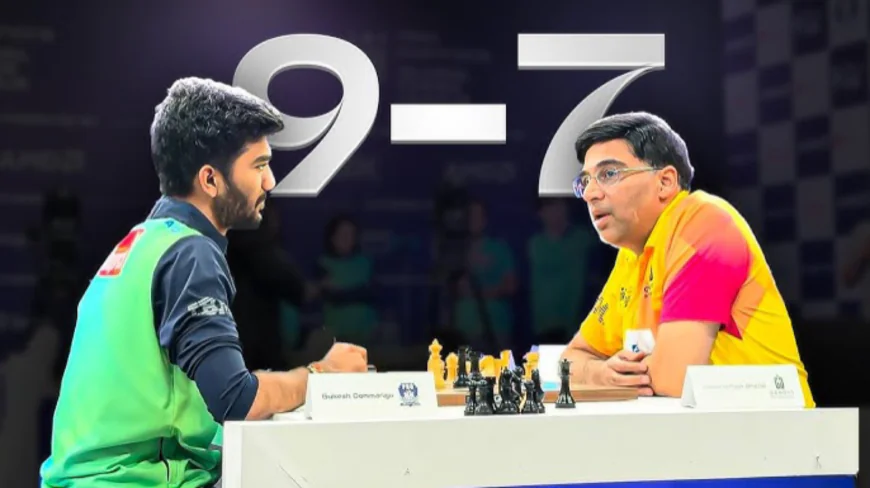
Indian chess prodigy D Gukesh recently described playing Viswanathan Anand as “like you’re playing against God,” a statement that captures the awe, pressure, and deep respect felt when a new generation faces a living legend. This article explores what that moment means for Gukesh, for Indian chess, and for the quiet passing of the torch.

The Weight of a Name
For most chess players, facing a strong opponent brings nerves. For D Gukesh, sitting across the board from Viswanathan Anand brings something deeper. Anand is not just another grandmaster. He is the reason many young Indian players picked up a chessboard in the first place. When Gukesh speaks about playing him, his words carry reverence rather than rivalry.
Calling the experience “like playing against God” is not exaggeration. It reflects how Anand’s presence commands respect before a single move is played. His calm, his timing, and his instinct are qualities that decades of brilliance have refined.
Growing Up in Anand’s Shadow
Gukesh belongs to a generation that grew up watching Anand dominate world chess. Tournament highlights, world championship wins, and iconic interviews were part of his early learning years. For players like him, Anand was less a competitor and more a symbol of what was possible for Indian chess.
That history adds emotional weight to every encounter. Facing Anand is not just about calculation or preparation. It is about confronting the very standard that shaped your ambitions.
The Board Becomes a Classroom
When Gukesh plays Anand, the match feels like a lesson unfolding in real time. Every move carries intent. Every pause holds meaning. Even moments of apparent simplicity can conceal deep strategy. Gukesh has spoken about how such games sharpen his understanding of chess beyond theory.
There is humility in recognizing that even at the highest level, there is still much to learn. Playing Anand becomes an education in patience, discipline, and mental balance.
Respect Without Fear
What stands out is that Gukesh’s admiration does not weaken his competitive spirit. He does not step back or play defensively because of the name across the board. Instead, he channels respect into focus. That balance between reverence and confidence is what defines champions in the making.
Indian chess is now at a stage where legends and successors meet as equals in rating, but not in legacy. Navigating that space requires emotional maturity as much as skill.
A Quiet Passing of the Torch
Moments like these symbolize a transition. Anand represents an era that opened doors. Gukesh represents one that walks through them with belief. Their games are not clashes of ego but conversations between generations.
When Gukesh says it feels divine, he is acknowledging history, greatness, and responsibility. And in doing so, he reminds the world that Indian chess is not just surviving its golden age. It is learning how to carry it forward.