






























When Minds Meet Machines: The Great AI-Human Intelligence Divide
Experts are not clear about AI matching human intelligence till when — each one of them providing different timelines, definitions altering, and even the doubt itself being debated.

Charting the Intelligence Map
The issue of an AI's intelligence being equal to a human one has been the most debated, as it affected the scientific, economic, and political worlds. A research published recently in The Indian Express confirms that leading AI scientists are extremely divided not only on the timing of such an event, but also if a machine will ever achieve human-level general intelligence.
Diverging Timelines, Diverging Visions
On the evening of the FT Future of AI Summit, Geoffrey Hinton could foresee the case of a machine always winning a debate with a human twenty years from now. Yoshua Bengio on the other hand, although at that time signaling a kind of AI-human equivalence in the work context within five years, still he was warning about the great amount of uncertainty accompanying his estimate. Yann LeCun conversely maintained the view that development would be stepwise and we still needed that paradigm-shift for genuine human-level AI.

Is It Even the Right Question?
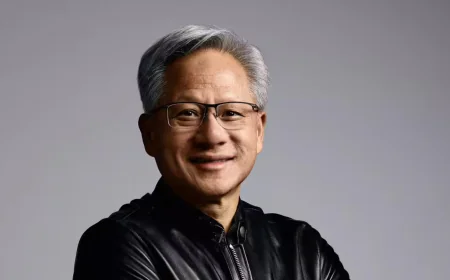
Several experts dismiss the assumption underlying the question. Jensen Huang of NVIDIA thought it more of a concern for scholars only, as to whether machines should outperform humans in intelligence but the real issue being how AI can enhance human capabilities. Bill Dally had a similar standpoint, stating AI's task as to “complement what humans are good at” — creative, empathetic, socially aware activities — not to duplicate human intelligence exactly.
The Human Intelligence Edge
During the debate, Fei‑Fei Li’s input was that machines, while being able to master a particular domain (for instance, identifying thousands of objects) still face difficulty in tasks which humans do naturally such as spatial reasoning, subtle interaction and creative world-building. This means human intelligence is not just a higher score to beat but rather a totally different kind of intelligence.
Implications and Stakes
The implications derived from the arguments are enormous: impacting workplaces, policy-makers, educators and society in general. Supposing machines reach or even outsmart human intelligence level in certain areas, what would be the labour structuring then? How would we regulate such systems that can learn, adapt and be autonomous? The experts are unanimous on this: AI's impact does not wait for the perfect match of human intelligence, it is already significant and far-reaching.