


































NVIDIA’s ‘Reasoning AI’ Can Tackle Indian Roads, Says CEO Jensen Huang
NVIDIA CEO Jensen Huang says the company’s new reasoning AI platform Alpamayo can handle the complexity of Indian roads, marking a major leap toward autonomous driving in India.


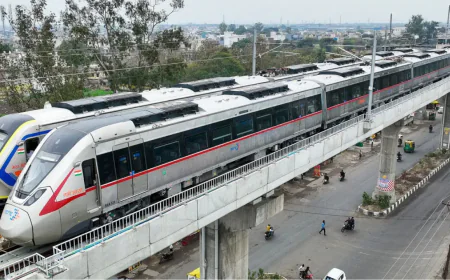
According to NVIDIA CEO Jensen Huang, the new reasoning AI system, which the company has developed under the direction of the Alpamayo platform, can tackle the problem of Indian roads, which is currently widely regarded as one of the most challenging in the world to be solved by autonomous driving. The quote is a possible turning point of the mobility powered by AI in India.
Why Indian Roads require more than Computer Vision
Huang claimed that the conventional computer vision based autonomous systems do not work well in the driving conditions in India. The Indian roads require not only a sense of lanes and vehicles but also a sense of Indian nuances which he had defined as a 360-degree experience: a sense of the informal signals like honking, eye contact, random people movement, inadequate lane courtesy. The reasoning-based architecture by Alpamayo has its design built in such a way that it is capable of thinking like a human driver. The system is not just responsive to visual information but deconstructs complex traffic scenarios into smaller, more logical actions, enabling them to make judgments on the safest action even in extremely diverse and chaotic traffic scenarios.

Between Perception and Reasoning: The solution of the Long Tail Problem
One of the major steps made by Alpamayo is the capability to deal with the so-called long tail of driving situations rare and unforeseeable situations that are not observed in regular training data. Autonomous systems developed earlier could not succeed in this area as they used pattern recognition extensively.
Alpamayo on the other hand rationale through situations that are not recognised but not silent. More importantly, Huang had a focus on transparency: the AI is capable of showing the reasons behind its driving choices in real time. This explainability, he observed, is not only necessary to the general trust of the people but also to regulatory approvals particularly in the nations such as India that have high safety inspection.
Open source, first automobile, and Indian Sovereign AI Push
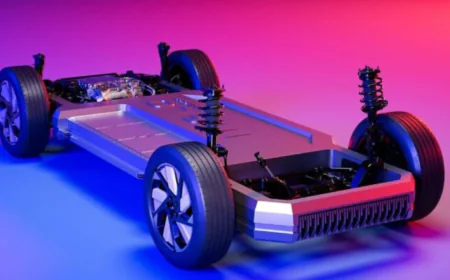
NVIDIA has also made Alpamayo, an open-source model, available on Hugging Face, which allows Indian developers and researchers to retrain it to local conditions, which will accelerate its adoption locally. This technology stack will first be used in the Mercedes-Benz CLA, and is planned to roll out globally, including in Asia, later in 2026. In addition to automobiles, Huang highlighted that India should create its own “Sovereign AI infrastructure to display the language, culture and values of this country in the form of data centres and chips. Huang will elaborate on these themes on the India AI Impact Summit in New Delhi on February 1920, 2026. Provided Alpamayo performs well on the Indian roads, which may be the harshest real-life autonomous driving test in the world, it may transform the global standards of autonomous driving. In the case of India, it heralds as a transition of an ominous edge case to a testing ground of next-generation AI mobility.