


























Bridging the Linguistic Divide: How OpenAI’s New ‘IndQA’ Aims to Uplift Indic LLMs
OpenAI's IndQA benchmark covers 12 Indian languages, along with 10 cultural domains a significant move towards the creation of AI systems in Indian languages.

The Challenge of Language and Culture
In the field of artificial intelligence, English is mostly the language used. Nevertheless, India - the place where hundreds of dialects and dozens of major languages are spoken - is still not fairly represented in the AI industry. There are millions of Indians who communicate in their own languages, and the models that are currently available are at a loss to understand the nuances, idioms, and cultural aspects of these languages.
This is precisely the point where IndQA comes into play as an instrument to identify the testing and training needs of Indic LLMs with respect to their linguistic, cultural, and contextual understanding capabilities.
Presenting IndQA: A Benchmark for India.
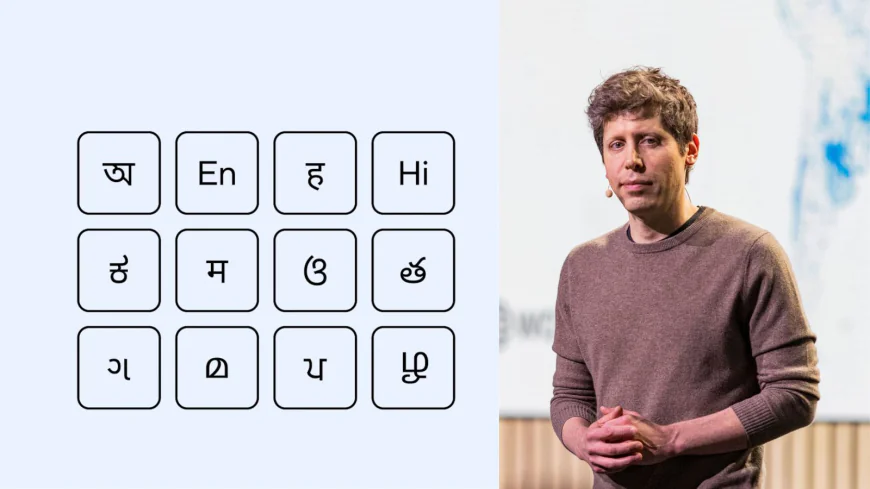
OpenAI has released IndQA, a comprehensive dataset with 2,278 questions in 12 Indian languages and based in 10 cultural domains.The languages are Hindi, Tamil, Telugu, Bengali, Kannada, Malayalam, Marathi, Odia, Gujarati, Punjabi, Hinglish, and English.
The domains are a reflection of different facets of Indian lifestyle literature and linguistics, law, cuisine, history, sports, and spirituality are just a few examples. The idea is to make sure that language models can not only understand the syntax but also the cultural side of such a huge and diverse country as India.
Built with Local Expertise
More than 260 Indian experts, linguists, writers, artists, and educators have contributed to the creation of the IndQA benchmark. Each question is originally composed in the local language and not translated which is more culturally accurate.
The questions require the models to think contextually, not just pattern recognition. Taking the example of "Who built the Taj Mahal?", IndQA could be assessing if a model gets the architectural symbolism of the Mughal era or the linguistic variations in describing it, rather than just knowing the answer.
A Step Toward Equality in AI
Worldwide AI models have had difficulties with Indian scripts and mixed-language texts for many years. The introduction of IndQA provides a way for Indian language AI research to be progressive in a measurable way. The benchmark is not a leaderboard, but rather a growth metric which is indicative of the gradual bridging of the cultural context AI gap by Indic LLMs.
Additionally, it points out the necessity for enhanced local datasets, increased representation, and more profound language diversity AI investments.
The Road Ahead
Though the IndQA will not immediately solve all the problems, it does signify an important turning point in multilingual benchmark research. By accepting the linguistic complexity of India, AI moves towards inclusiveness which means that the technology will not only be for those who speak English but for the whole India.