







































The Ancient Thirst We Inherited: How Our Primate Past Shapes Today’s Love for Alcohol
New scientific research suggests that humans’ attraction to alcohol may not be a modern indulgence but a deep biological legacy from our primate ancestors. The study argues that early primates developed a taste for fermented fruit as a survival strategy, unknowingly setting the survive foundation for humanity’s long-standing relationship with alcohol.

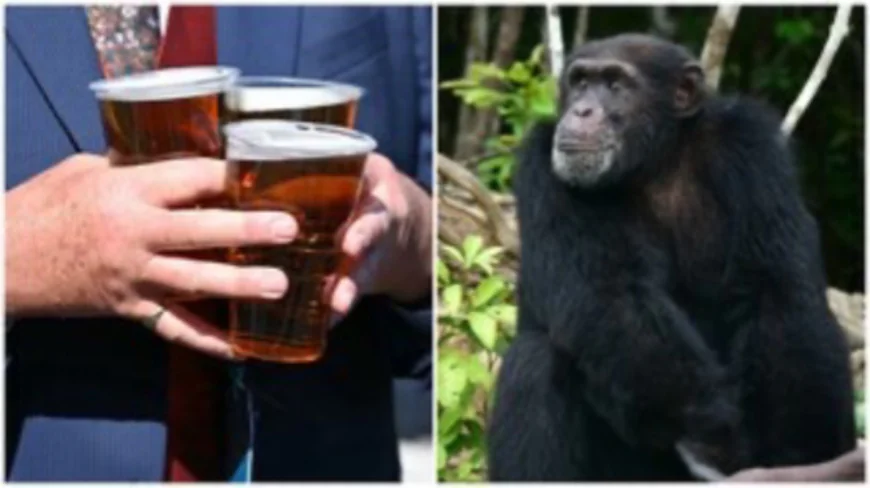
A Taste Rooted in Evolution, Not Habit
Most of us think of alcohol as a cultural creation—something passed down through traditions, celebrations, or social rituals. But scientists point to a much older story. Millions of years before humans brewed their first drink, primates were already seeking out fermented fruit in forests.
These overripe fruits naturally contained small amounts of ethanol. Early primates with a keen nose for this scent were better at locating calorie-rich food. In tough seasons, this instinct could mean the difference between survival and starvation. That subtle advantage, researchers argue, eventually became part of our genetic makeup.
The “Drunken Monkey” Hypothesis Gets New Backing
For years, scientists floated the “drunken monkey hypothesis” as a possibility. Recent studies, however, are giving it more credibility. By analyzing primate behavior and molecular adaptations, researchers found that our ancestors evolved enzymes that could efficiently break down ethanol.
In simpler terms, the bodies of ancient primates learned to handle alcohol long before humans discovered fermentation. This biological familiarity may be why humans, compared to many animals, can tolerate moderate alcohol consumption without severe immediate effects.
From Forest Floor to Modern Glasses
While ancient primates consumed alcohol by accident, humans turned it into an art. Fermentation became a deliberate craft, eventually woven into religious rituals, medicinal practices, and social customs. But the underlying attraction—the subtle pull toward the sweet, fermented aroma—may still echo our evolutionary past.
Scientists suggest this inherited tendency helps explain why alcohol holds such a persistent place in human societies. It also highlights why responsible consumption requires awareness: we are biologically drawn to something our ancestors relied on for survival, but which can become harmful in excess.
A New Perspective on an Old Habit
This research reframes alcohol not as a moral failing or simple preference, but as a remnant of deep evolutionary history. Understanding that connection can help us approach drinking with more clarity—recognizing both the ancient instinct behind it and the modern responsibility that comes with it.