





































UPSC Makes Exam Centres More Accessible for PwBD Candidates With New Centre-of-Choice Rule
UPSC introduces a key reform allowing candidates with benchmark disabilities to select their preferred exam centres, even beyond regular capacity, easing travel stress and improving accessibility in competitive exams.


The Union Public Service Commission has quietly introduced a change that could make a real difference to thousands of aspirants with benchmark disabilities. Candidates falling under the Persons with Benchmark Disabilities category will now be allowed to appear for UPSC examinations at the centre of their choice, even if that centre has already reached its usual seating capacity.
This move applies to major UPSC exams, including the Civil Services Examination, and is being seen as a long-overdue step toward fairer access.
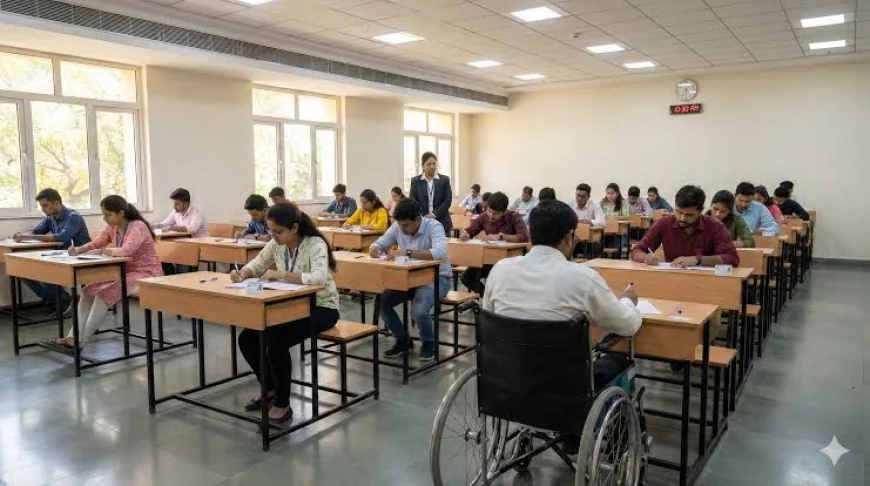
Why Exam Centres Matter More Than We Admit
For most candidates, an exam centre is just a location on a map. For candidates with disabilities, it can mean the difference between a manageable exam day and an exhausting ordeal. In the past, many PwBD aspirants were pushed to far-off centres because popular cities filled up quickly during the application window. That often meant long-distance travel, unfamiliar infrastructure and avoidable physical strain.
UPSC’s revised approach recognises that accessibility isn’t just about ramps or scribes. It’s also about proximity, comfort and predictability.

How the New System Will Work
Under the updated process, UPSC will continue allotting centres to all candidates as usual until a centre reaches its capacity. Once that happens, the centre will be closed for general candidates. However, PwBD candidates will still be allowed to select that centre as their preferred option.
To make this possible, UPSC will create additional seating arrangements wherever required, ensuring that no eligible PwBD candidate is turned away from their chosen location.
Relief for Aspirants, Not an Advantage
This change does not alter the level of competition or evaluation standards. What it does is remove a logistical hurdle that disproportionately affected candidates with disabilities. Less travel means lower costs, reduced stress and better focus on the exam itself.
A Step in the Right Direction
While the reform may look procedural on paper, its impact is deeply human. It acknowledges the realities aspirants live with and sends a clear message that inclusion is not an afterthought. If implemented consistently, this could set a strong precedent for other examining bodies across the country.