

































“The Workweek Revolution: Zoom CEO Predicts 3-4 Day Weeks Thanks to AI”
The CEO of Zoom says that artificial intelligence might allow us to have a 3-4 day workweek with increased flexibility and productivity but some jobs will become obsolete. A major change in the work environment is coming.

Shift in Work Culture
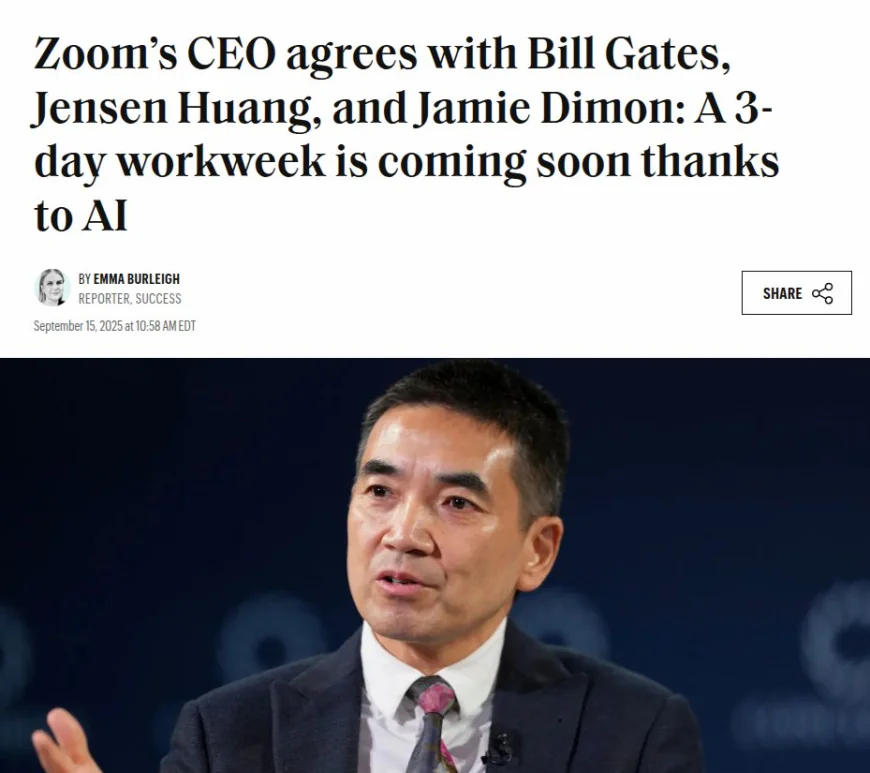
On September 21, 2025, just before the weekend, Zoom’s CEO Eric Yuan made a very significant announcement, that the traditional five-day workweek that we all know and love (or not) could soon end. Yuan foresees that due to the extensive developments of the field of AI, numerous firms would be shifting to the new schedule of three or four days.
He supports this argument by saying, "If AI is capable of delivering more productivity with less input, why should employees be forced to follow antiquated working hours?"
Gains: Flexibility and Efficiency
Mike wrote in an article that Eric Yuan believes that the greatest benefit of the change would be time liberation. AI could better manage routine workloads while it also coded, debugged, and managed digital agents, competent human staff would be free to unleash their creativity or take more supervisory roles. This, he contends, could create better work hours, higher concentrations, and even increase job enthusiasm.
Risks: Jobs May Disappear
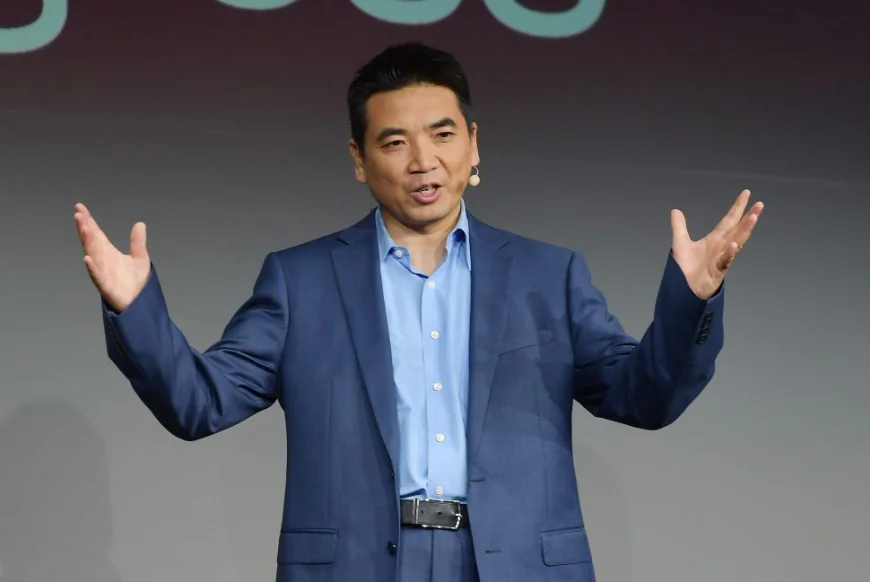
However, on the contrary, things may not always work smoothly. Yuan stresses as he points out that with the gradual AI takeover in numerous domains, layoffs will inevitably follow. The job duties of those on the most basic levels of the company, in particular, will more than likely be automated if they are heavily reliant on repetitive PC-coding work. Still, Yuan insists that these roles will be replaced by the new ones—especially with most of those AI-related jobs that supervise or improve the AI systems.
Consensus Among Tech Leaders
Yuan's prediction finds support from several other tech figures. Among them are Nvidia's Jensen Huang and Wall Street executives who have also indicated that AI not only will affect the duration of working hours but also the way how workweeks are structured. The concept of shorter workweeks is not new but the swift progression in AI capabilities is giving it a new lease of life.
What This Means Going Forward
Corporations may start the trials of compressed workweek or flexible work hours.
Employees working in areas that are most likely to be automated might be required to have additional training or upgrade their skills.
The transition to a fair economy and society would necessitate the joint efforts of the government in policy-making, labor unions, and business leaders in order to safeguard the interests of the workforce and manage the social effects of the transition.
This is more than just speculation, it's a harbinger of an upheaval in the work environment that most anticipate as of the very day of the launch.