





























Speeding into Surat’s Future: PM Modi Reviews Diamond-Inspired Bullet Train Station
PM Modi took a look at the progress of the bullet train station that is being built in Surat, a major stop on the first Mumbai–Ahmedabad high-speed corridor.


Introduction
In line with India’s high-speed rail initiative, Prime Minister Narendra Modi went to the city of Surat to see the red-hot metro station of the red-hot Mumbai– Ahmedabad High-Speed Rail Corridor. His move is a big deal for India's expansion of the new ultra-fast-speed rail network.
A Visionary Inspection
At about 10 o'clock in the morning, Modi visited the district in Antroli, Surat, to see the work for the MAHSR (Mumbai–Ahmedabad High-Speed Rail) corridor. He received information about the location and progress of civil works, structures under the bridge, and other essential parts of the building from the local staff who accompanied him on his visit.
Engineering in High Gear
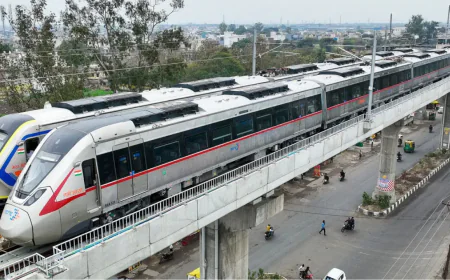
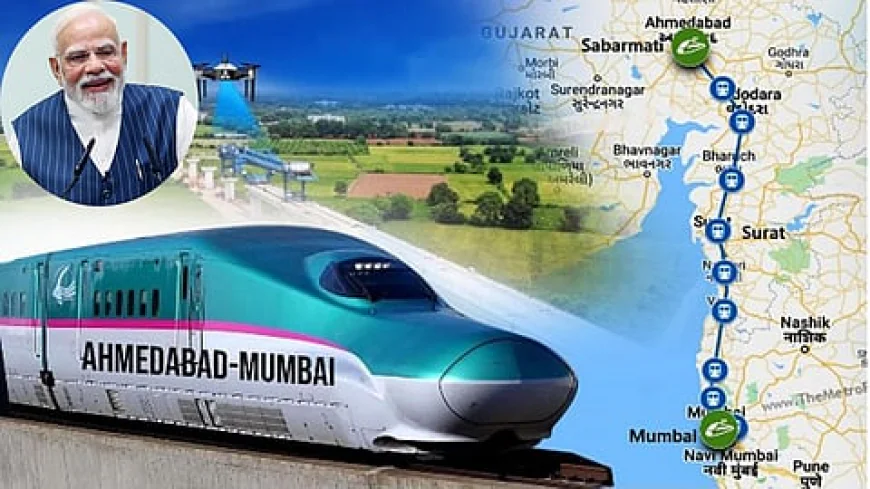
The corridor is 508 km long and goes through the states of Gujarat and Maharashtra. The use of state-of-the-art methods has brought the viaduct to about 326 km, and out of 25 river bridges 17 have been completed. All the construction work including the laying of the track-bed of the Surat–Bilimora stretch (47 km) has been completed.
A Station with a Sparkle
Indeed, the design of the station is derived from the city's diamond industry, which has been the core of Surat's tradition. The station is going to be complete with the modern amenities for the traveler like the large waiting rooms, restrooms, shops, and also easy access to the Surat Metro, city buses, and the Indian Railways.
Speed Meets Efficiency
After the bullet train gets going, the fast train will save a lot of time (the trip from Mumbai to Ahmedabad will take only about 2 hours). This move in connectivity could have an enormous impact on commuting, business, and the tourism of these big cities turning them into a kind of tangled network.
Strategic Impact & Regional Growth
Without a doubt, this initiative will contribute heavily towards the local economy. The intervention, in fact, will connect the major urban centers such as Sabarmati, Ahmedabad, Anand, Vadodara, Bharuch, Surat, Bilimora, Vapi, and many more, thus accelerating the process of regional integration.
Infrastructure Meets Sustainability
Some of the environmentally friendly provisions for the station include beautifully designed green spaces, systems for harvesting rainwater, and energy-efficient design factors. The government representatives claim that this agreement to worldwide criteria is a sign of India's ever-increasing determination to build sustainable infrastructure.
What’s Next?
Take a look at PM Modi's work assessment. This is not just a ceremonial event that marks the government's resolve to get the job done swiftly. With such fast progress, the Surat–Bilimora segment is likely to be in service first, maybe by as early as 2027.