
































All You Need to Know About Why Does India Spend Less on Education? Facts and Myth
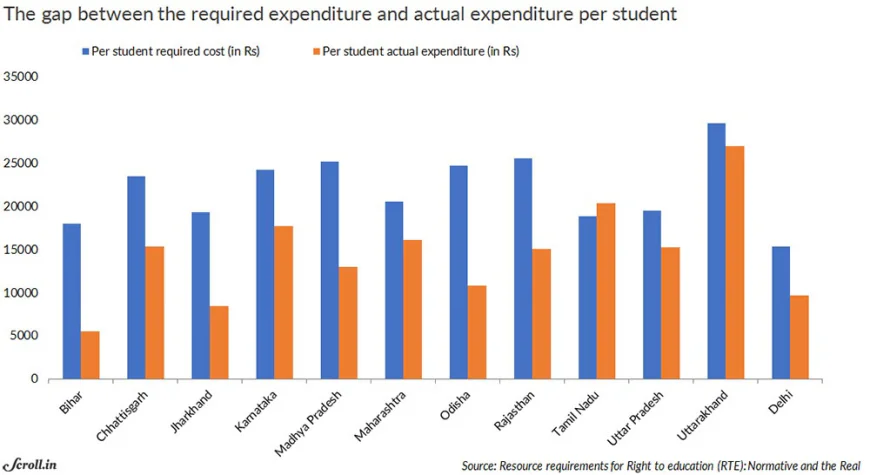
When India's population surpassed 1.4 billion, it created unprecedented demand for educational resources. Thus, even as budgets increased nominally, spending per student remained very low due to the overwhelming number of institutions, teachers and students to spread funds through.

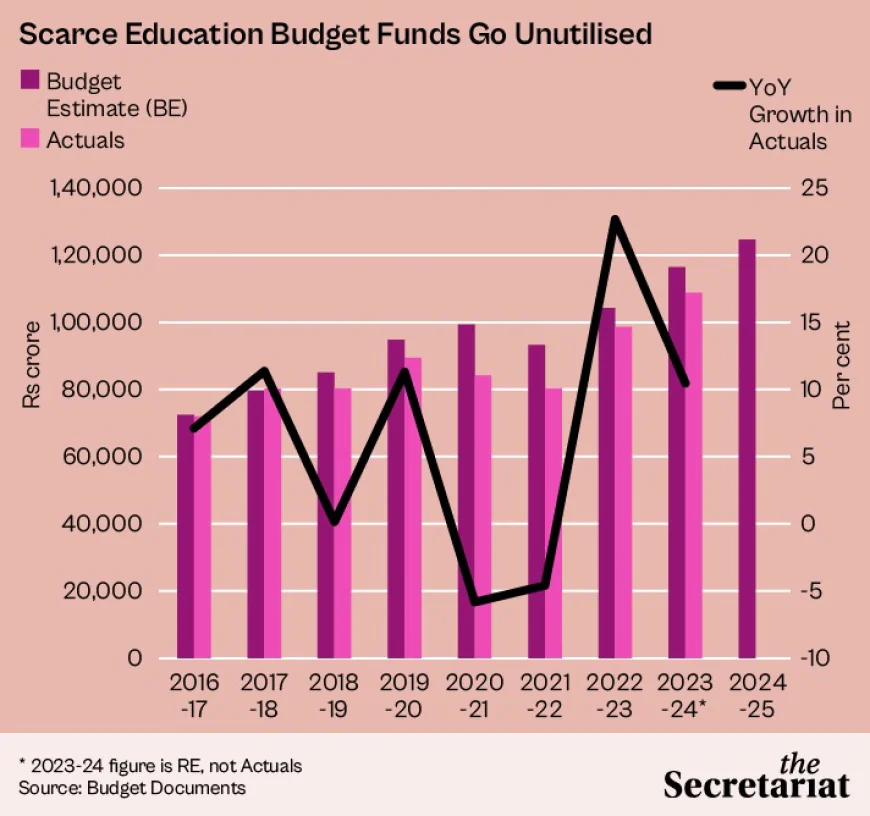
Fewer things are touted as the backbone of a nation’s advancement as education. Despite being one of the fastest growing economies in the world, India is not investing as a high share of its GDP in education as would be expected when compared to other countries. UNESCO’s recommended level of expenditure in education is approximately 6% of the GDP, and in India, it has been between 3-4% for many decades. Therefore, a big question remains: Why does India spend so little on education?
1. Competing Budget Expenditure
One of the primary reasons is that the Indian government has multiple spending needs. Multiple sectors are demanding urgent spending: infrastructure sector, healthcare sector, defense sector, and welfare schemes sector etc. Globally, Governments are expected to provide the basic needs for the vast population: combating poverty, dealing with disaster-relief measures, public health measures, etc. Because of this, the expenditure on education continues to be a smaller portion of the budget.
2. High Population Pressure
When India's population surpassed 1.4 billion, it created unprecedented demand for educational resources. Thus, even as budgets increased nominally, spending per student remained very low due to the overwhelming number of institutions, teachers and students to spread funds through.
3. Focus on Quantity Over Quality
India has focused almost exclusively on access to education over the years (opening more schools and registering more children). While a necessary development, it has come at the expense of investment in quality improvements, teacher training and modern facilities. The end result is an unsupported budget focused on reach as opposed to depth.
4. State vs. Central Responsibility
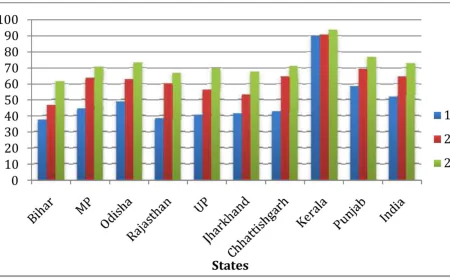
In India, education is both a central government subject and a state subject. Because the state and central governments share this responsibility, sometimes planning and funding are separate and systemic. Many states have limited revenues (especially poorer states), which affects the funding of schools and colleges.
5. Administrative Inefficiencies
Bureaucratic hurdles, corruption, and inefficiency also pose challenges. Funds spent on education are not all spent in classrooms. Funds leak, and implementation is often delayed, which takes away the value from all the money spent.
6. Underestimation of Long-Term Returns
Education represents a long-term investment, and the long-term returns associated with education are not visible through short-term measures of economic development. Because governments are pressured to show progress on more immediate outputs, they fail to appreciate ongoing investment in education, and in fact, are more willing to subsidize projects that can achieve short-term measurable outcomes.
Moving Forward
In order for India to reap its demographic dividend and compete effectively on the world stage, the level of spending on education needs to increase. This is not solely about increasing the budget but putting it to good use, recruiting and training better teachers, modernising curricula and bridging the urban-rural divide.