





































Maulana Azad’s Vision: The Foundation Stone Behind India’s Modern Education and the Birth of CISCE
India’s first Education Minister, Maulana Abul Kalam Azad, laid the philosophical groundwork for modern Indian education rooted in inclusivity, quality, and global standards. His ideas not only shaped India’s education system after independence but also inspired the creation of the Council for the Indian School Certificate Examinations (CISCE), an institution that continues to reflect his vision of holistic and human-centric learning.

A Visionary Beyond His Time
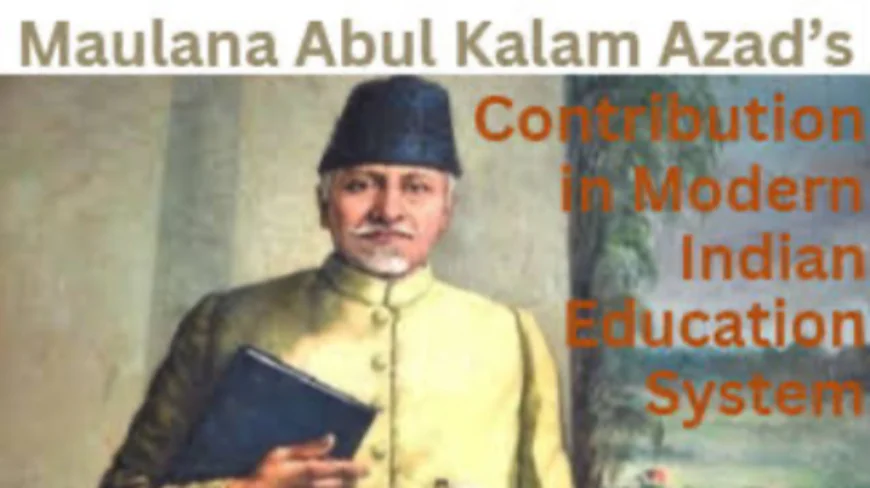
Maulana Abul Kalam Azad, appointed as India’s first Education Minister in 1947, believed education was the most powerful tool to shape a young nation. At a time when the country was recovering from the wounds of Partition, Azad saw education not merely as literacy but as a means to nurture intellectual freedom, national unity, and moral responsibility. He once said, “Education imparted by heart can bring revolution in the society.” His belief in liberal, inclusive, and secular learning formed the cornerstone of India’s educational reforms.
Building a Modern Education Framework
Under Azad’s leadership, India saw the creation of premier institutions such as the University Grants Commission (UGC), the Indian Institutes of Technology (IITs), and the Sangeet Natak Akademi. He envisioned an education system that balanced science and culture, reasoning and creativity. His policies encouraged not just rote learning but critical thinking — a philosophy that later influenced boards like the CISCE, which emphasize conceptual understanding and balanced assessment over rigid examination patterns.
The Birth of CISCE: A Reflection of Azad’s Ideals
The Council for the Indian School Certificate Examinations (CISCE), established in 1958, drew heavily from Azad’s ideals. The board aimed to offer education that was broad-based, globally relevant, and yet deeply rooted in Indian values. Its dual focus on academics and extracurricular development mirrors Azad’s belief that true education nurtures both intellect and character. The CISCE’s flexible, student-centered approach echoes Azad’s advocacy for individuality in learning an idea rare for his time.
Enduring Legacy
Maulana Azad’s contributions went beyond policies; they embodied a moral and philosophical framework that continues to guide India’s educational institutions. Every year on National Education Day, celebrated on his birth anniversary, the nation revisits his vision — one that continues to inspire bodies like CISCE to uphold excellence, inclusivity, and integrity in education.
In essence, CISCE stands as a living tribute to Maulana Azad’s dream — an education system that empowers minds, bridges divides, and prepares young Indians for a thoughtful, progressive future.