





































Uber’s Advance Tip Feature Faces Strong Criticism, Government Orders Investigation
Uber Advance Feature: Uber has recently launched a new feature in its ride-hailing app called Advance Tip. This feature is facing severe criticism on social media. Users are strongly condemning the Advance Tip feature introduced by the company.

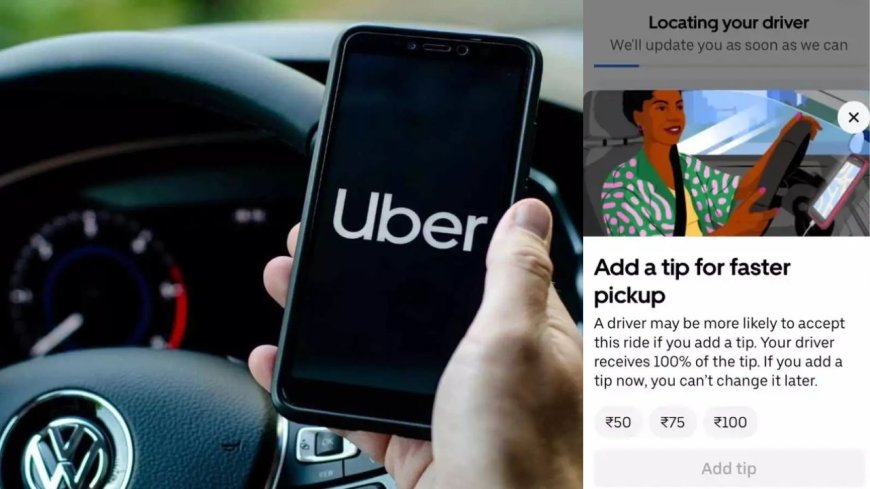
Uber Advance Feature: Uber has recently launched a new feature in its ride-hailing app called Advance Tip. This feature is facing severe criticism on social media. Users are strongly condemning the Advance Tip feature introduced by the company. Through this feature, the company is earning extra money from its customers and forcing them to pay additional amounts.
Tip Encourages Drivers to Accept Trips Quickly
Let us inform you all that, following reports, the Central Consumer Protection Authority has sent a formal notice to Uber. Consumer Affairs Minister Pralhad Joshi has also criticized this feature and called it exploitative of customers. It is being strongly criticized on social media as well, and it is considered a wrong way of doing business. Therefore, orders for a government investigation have been issued.
Demand for Tip Before Booking a Ride
After the launch of the Advance Tip feature, when you book any ride on Uber, you are first asked to add ₹50, ₹75, or ₹100 so that when you give a tip, the driver quickly accepts your trip. If you add a tip here, no changes can be made to it. The company is also trying to ensure that the entire tip goes to the driver’s account. Due to this feature, drivers are happy, but customers are not.
Customers Forced to Give Tips
Through this feature, customers feel as if they are tipping a waiter in a hotel after receiving complete service, but here Uber is collecting tips from its customers in advance, which is wrong. In this way, customers are being forced to give tips up to ₹100. If a customer’s ride costs ₹100, how can they give an additional ₹100 as a tip? The company has found this means of earning extra income. Most people have called it bribery and described it as a violation of customers’ rights.