































A Quiet Power Shift Beneath the Seas: Will the India–Germany Submarine Deal Redefine India’s Naval Future?
A silent shift is underway beneath the seas as India and Germany near an $8-billion submarine deal reshaping India’s naval power.

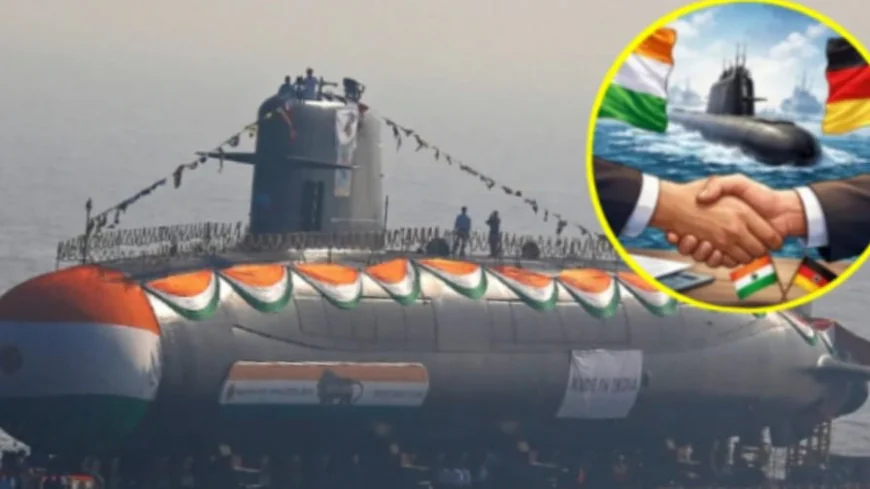
There is a huge strategic change shaping deep beneath the waters under the Indian Ocean. Recently, an 8-billion-dollar submarine agreement are going to finalise between India and Germany. This agreement will significantly shape India’s naval capabilities, its defence partnerships, and its long-standing strategic dependence on Russia. This agreement involves next-generation conventional submarines with Air-Independent Propulsion (AIP), to be built in India by Germany’s Thyssenkrupp Marine Systems (TKMS) in partnership with Mazagon Dock Shipbuilders Limited, with 60 percent indigenous content, extensive technology transfer, and access to advanced heavyweight torpedo systems—marking the first time Germany’s most sensitive submarine technologies will be manufactured on Indian soil.
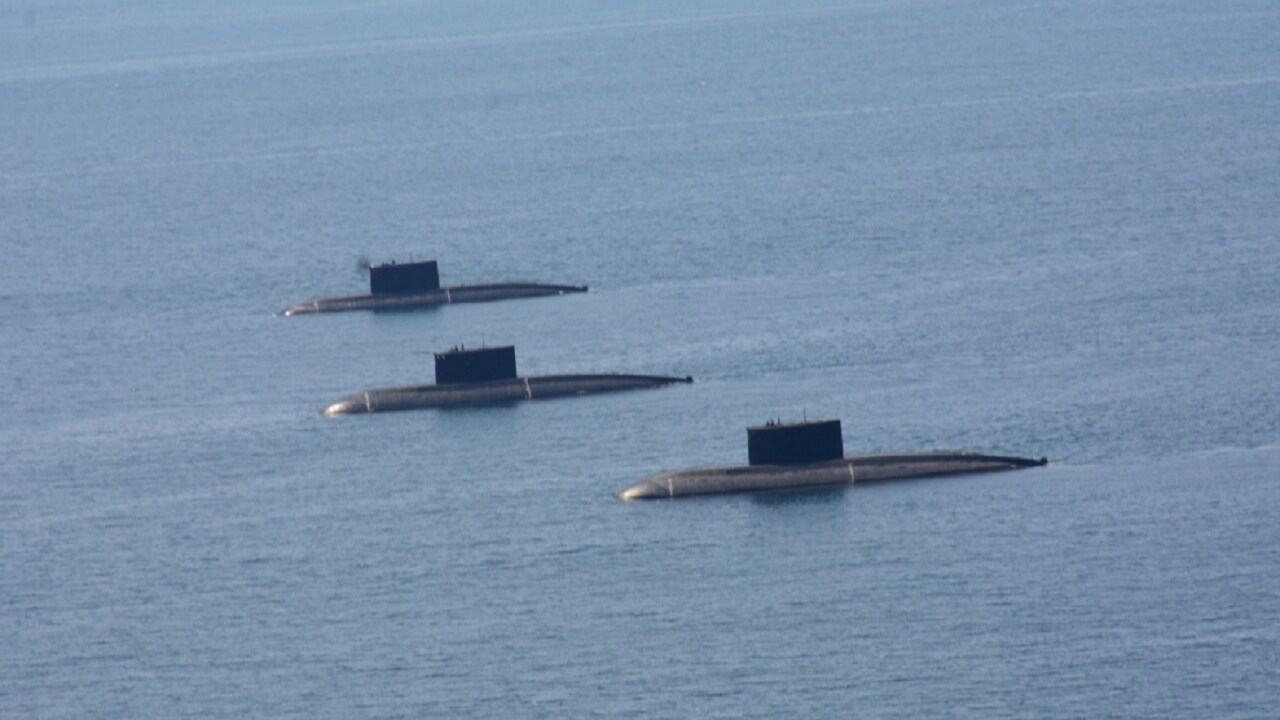
The submarines will be advanced with AIP technology which will enable them to take weeks instead of days underwater. This goes a long way in enhancing stealth, endurance and surveillance capabilities, which are difficult to track and detect in the disputed waters. To India, this would enhance maritime deterrence but not to the level of nuclear deployment and increase its capacity to monitor increasing naval activity in the Indian Ocean.
Technology transfer is one of the pillars of the deal. The expertise that will be offered by Germany will include AIP integration, general submarine design and construction, and hi-tech weapons. India will also have access to heavyweight torpedo technology under a Memorandum of Understanding signed between TKMS and VEM Technologies in September 2025, significantly enhancing the fighting capabilities of its future submarine force.
Air-Independent Propulsion or AIP technology
But, now the question is: What is Air-Independent Propulsion or AIP technology?
In normal submarines, the engine needs oxygen to work. That means the submarine has to come up near the surface every few days to take in air. And the moment it does that it becomes visible to enemy radars and satellites. AIP technology changes that. In simple terms: AIP allows a submarine to generate power without taking in outside air. So instead of surfacing every few days, an AIP-equipped submarine can stay fully underwater for two to three weeks.
Now, this is the game-changer. When a submarine stays underwater longer, it becomes:
-
Much harder to detect
-
Much harder to track
-
Far more effective in surveillance and ambush roles
In naval warfare, the most dangerous submarines cannot be seen. Different countries use different systems, but the goal is the same:
-
Produce electricity silently
-
Without air
-
For long periods
Germany’s AIP systems are among the quietest in the world, which is why their submarines are considered extremely stealthy. Nuclear submarines can stay underwater for months. But they are expensive, complex, and politically sensitive AIP submarines offer a middle ground:
-
Near-nuclear stealth
-
Lower cost
-
No nuclear escalation risks
That’s why many navies prefer AIP for regional waters like the Indian Ocean. India operates mostly diesel-electric submarines, which need to surface often. With rising Chinese submarine activity in the Indian Ocean, that vulnerability matters. AIP gives India:
-
Longer underwater patrols
-
Better tracking of enemy submarines
-
Stronger deterrence without firing a shot
AIP does not make submarines bigger. It makes them quieter, stealthier, and deadlier. And in modern naval warfare, silence is power.
The other feature of the agreement is its indigenisation. The project will commence with a 60 percent local content, which is more than the required 45 percent. It is hoped that the Indian shipyards will build local capacity in the construction of hulls, sensor modules and propulsion systems, which will allow India to eventually be not only an operator, but a producer of hi-tech naval platforms.
Strategic Submarine Deal Signals Realignment
The business environment of the deal is becoming more urgent. India now has a combination of the older Russian submarines with age and six newer French made Scorpene-type submarines, some of which are nearing the later services life stage. Simultaneously, China is fast increasing its naval presence in the Indian Ocean, as it becomes prominent in both the Djibouti and Sri Lanka, as well as Pakistan, becoming a major threat under the sea. The time also depicts changing world orientations.
Germany, which is still restoring its defence industry after the Ukrainian war and expanding it, pursues long-term strategic alliances outside the NATO. India on the other hand has advocated the concept of Make in India, local production and meaningful transfer of technology instead of mere arms importation. The submarine deal fulfils both purposes.
There may be also broader diplomatic consequences of the agreement. Should this be finalised, India might re-examine its plans to purchase more French submarines, which will strengthen its policy of diversification of its defence relationships. Although Russia is still a significant source of Indian military equipments, the deal is an indication that there will be a gradual repositioning that is not based on reliance on any individual country.
The project has its risks despite the promise it has. There is still some question regarding the thoroughness of the technology transfer and the capacity of India to absorb and maintain complex submarine technologies as well as the possibility of delays or cost overruns as was experienced in past defence programmes. Nevertheless, analysts consider the purchase to be more than a purchase decision. It is a bold initiative towards increased autonomy of India, increased German contribution to the security of Indo-Pacific region and a defence environment that is less ideologically inspired but rather pragmatically solitary to national interests.
Two-Day Trip of Friedrich Merz in India
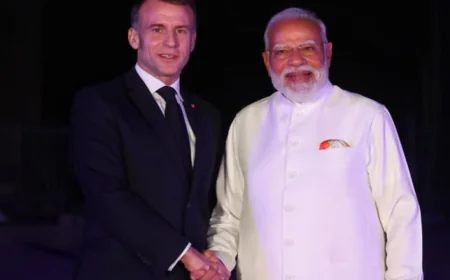
A new balance of power is taking shape quietly, under the waves. As seen below image, Germany's Friedrich Merz on Monday (January 12, 2026) has arrived in India on his two-trip as chancellor.
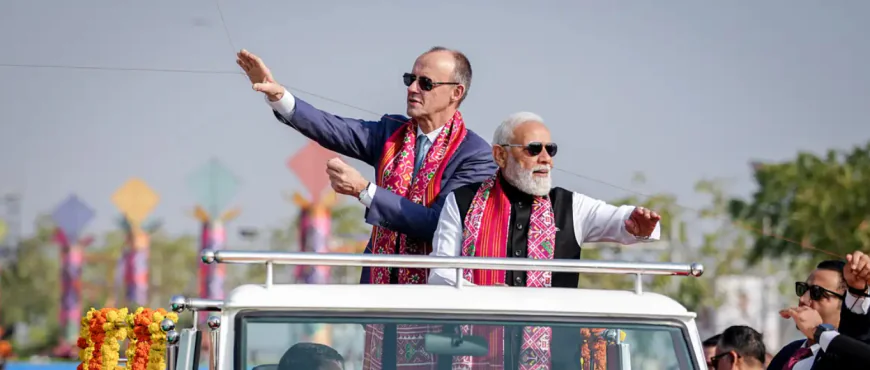
German Chancellor Friedrich Merz, on his first visit to India, is holding high-level talks with Prime Minister Narendra Modi today in Gujarat, with defence cooperation high on the agenda. There has been an observation about an 8-billion-dollar submarine deal in which German high technology will be transferred to India and locals would build their own submarines. Later, Merz will visit Bengaluru where he will be meeting German defence and technology firms, highlighting the push of Berlin towards long-term manufacturing relationships in India. The agreement is compatible with India developing weapons production localisation and may become a significant milestone in decreasing Indian reliance on Russian weapons imports.