

































Economic Survey 2025–26 Tabled: What It Signals for India’s Growth and Union Budget 2026–27
Economic Survey 2025–26 tabled in Parliament projects 6.8–7.2% GDP growth for FY27 and sets the policy direction for Union Budget 2026–27.


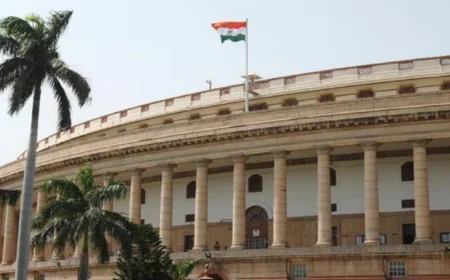
Finance Minister Nirmala Sitharaman on Thursday, January 29, 2026, tabled the Economic Survey 2025–26 in both Houses of Parliament—the Lok Sabha and the Rajya Sabha—setting the tone for the Union Budget to be presented later this week. The annual policy document provides a thorough overview of the economic performance of India in the last financial year in addition to describing the central trends, challenges, and growth opportunities in the coming fiscal year. The Survey is the government-sponsored and official review of the macroeconomic environment, prepared by the Economic Division of the Department of Economic Affairs under the supervision of Chief Economic Adviser (CEA) V. Anantha Nageswaran to include such areas as GDP growth, inflation, employment, fiscal tightening, foreign trade, and sector performance. It is traditionally published the day before the decisive period of the Budget session, the Economic Survey is a guiding principle on which policymakers, investors, heads of industries, and economists can realise the motivation behind future fiscal and structural actions. Its introduction in Parliament is a key budgetary time of the year since it is the precursor to the introduction of the Union Budget 2026-27 to be presented on Sunday, February 1, 2026.
Economic Survey 2025–26: India’s Growth Outlook for FY27 Remains Strong Despite Global Risks
The Economic Survey 2025-26 estimates the growth of real GDP in 2026-27 as between 6.8 and 7.2 percent, slightly slower than the projected growth of 7.4 percent in 2026 but still among the fastest in the world. The Survey describes the outlook as one of steady growth despite the uncertainty in the world with strong domestic basics. Consumer consumption has become the most important source of growth since it has now reached a decade-high 61.5 percent portion of GDP that indicates a great household demand. The momentum of investment is also strong due to the continued government spending of capital and enhanced investor confidence in the economy characterised by high gross fixed capital formation (GFCF). The survey identifies macroeconomic stability as a key strength (low inflation and stronger balance sheets of households, corporates, and banks). Notably, it observes that the structural and regulatory changes that have been undertaken over the years have raised the medium term growth potential of India to around 7 percent. Nevertheless, it raises the red flag over global risks geopolitical tensions, trade disconcertations and unsound external demand as some of the uncertainties that may affect exports and investor sentiment.

How the Economic Survey 2025–26 Will Shape the Union Budget 2026–27
The Economic Survey 2025-26 will have a decisive influence on the Union Budget 2026-27 and will give the macroeconomic framework to the fiscal and policy decisions. The Survey will help reinforce the argument of further fiscal consolidation as it achieves this by establishing that the government is progressing towards the 4.4% target of fiscal deficit in FY26, with keeping spending levels capable of supporting growth. One important lesson gained is the significance of capital spending and the Survey confirmed that its proportion of total government spending has increased approximately twofold over the past few years. This is projected to be translated into long-term infrastructure development in roads, railways, ports, and logistics to crowd in private investment and generate employment. The sector-specific recommendations included in the Survey, such as the manufacturing and export competitiveness, agriculture reforms, AI governance, and the welfare of gig workers among others, will have a potential impact on specific budgetary allocations and incentives. It also cautions about external threats such as fluctuating capital flows and the uncertainty encountered at the global level and it forces the Budget to concentrate on the establishment of economic buffers and investor confidence.