










PM Modi to Youth: You Are Building India’s Destiny
Prime Minister Narendra Modi addresses the Viksit Bharat Young Leaders Dialogue, urging India’s youth to lead innovation, startups, culture, and nation-building toward a developed India by 2047.


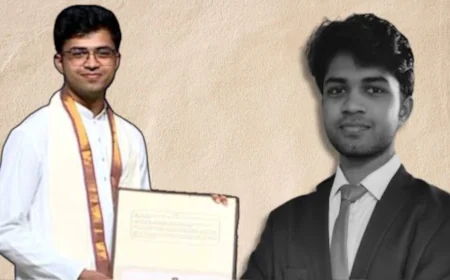
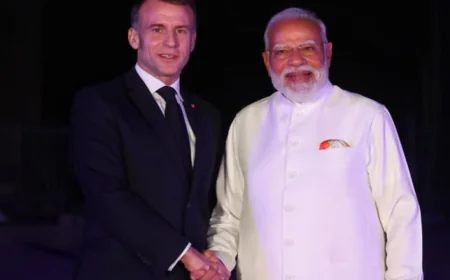
Prime Minister Narendra Modi addressed the concluding session of the Viksit Bharat Young Leaders Dialogue (VBYLD) 2026 at Bharat Mandapam in New Delhi on January 12, 2026. By stressing the years preceding 2047 as an important phase in the development of the nation, the Prime Minister made it clear that young people have a key part to play in the future greatness and prosperity of India. In one of the town hall-like engagements, young leaders delivered their high-impact ideas and a book of the chosen essays was published.
Modi emphasised some important reforms that will speed up the development of youths, especially in such areas as the space, defence industries, digital economy, and start-up ecosystem. He further urged the youth to use technology such as gaming to foster the vibrant culture and storeys of India around the world. The Prime Minister made a major appeal to the youths to cast off the culture of slavery that they have inherited during the colonial rule and to proceed with having confidence in the heritage and ability of India.
The VBYLD 2026, which was organised by the Ministry of Youth Affairs and Sports, was a venue where young leaders could deliver ideas on how the vision of an Indian that is already developed can be realised by 2047. The last session on January 12th was on the occasion of the birth anniversary of Swami Vivekananda, which was marked as the National Youth Day, based on his life as an example to the youth. The discussion, which occurred between January 9-12 was expected to transform into an ongoing think wave that would feed forward government policies and initiatives in line with the Viksit Bharat@2047 vision. It also aims at developing a new generation of leaders through encouraging the younger generation to participate in the governance, innovation, and development of the communities.

Faith in Youth and the Role of Young Leaders in Building Viksit Bharat
The Prime Minister kept on stressing the fact that he had had a long-standing belief in the young people of India and made them the key to the national future. He emphasised the change of generation and the burden that was left to young shoulders. He said, as he always has done, whether when he was Chief Minister or when he is now Prime Minister, he has been immensely confident in the younger generation. “I have never had to lack the stimulus of your ability and your power.” He also related ambition among youth to that of the nation by remarking that, that ability of yours, would be the ability of India and your own achievement would elevate Indians to greater heights.
According to the Prime Minister, the Viksit Bharat Young Leaders Dialogue was not merely an event but a platform of transformation to be participated in. He has pointed out the historical levels of youth involvement, saying, More than five million youth registered, more than three million active in the Viksit Bharat Challenge. He also raised the status of the forum by stating that this forum is now an institution- a rare global think tank.
When the Prime Minister described the Amrit Generation of young Indians as creative, confident, and committed, it was evident that the youthful Indians are no longer the passive observers of the policy but the architects of a developed India.
Startup Revolution, Reforms, and Youth-Led Innovation
A major focus of the address was how structural reforms after 2014 transformed India’s innovation ecosystem. The Prime Minister reminded the audience of earlier constraints, stating, “You did not witness the era of policy paralysis, when governments were criticised for delayed decisions.” He contrasted this with today’s reform-driven approach: “Keeping youth at the centre, we introduced one reform after another.”
He explained how initiatives such as Startup India and Digital India unlocked opportunities, noting, “Until 2014, there were fewer than 500 registered start-ups in the country.” Highlighting sectoral openings, he said, “We opened the space sector to private enterprise.” This led to concrete achievements, including “Skyroot Aerospace developed its rocket, Vikram-S” and “Agnikul Cosmos… creating the world’s first 3D-printed engine.”
The Prime Minister also spoke about reforms in drones and defence, stating, “We introduced new rules and simplified them.” As a result, “Today, more than 1,000 defence start-ups are working in India.” These examples demonstrated how removing barriers empowered youth-led innovation across strategic sectors.

Viksit Bharat Young Leaders Dialogue
Culture, Creativity, Self-Confidence, and India’s Global Future
The Prime Minister strongly linked development with cultural confidence and creative power. He highlighted the rise of the Orange Economy, stating, “India is witnessing unprecedented growth in the Orange Economy, that is, culture, content, and creativity.” He encouraged youth to merge tradition with technology, asking, “Can we take these into the world of gaming?” and asserting, “Our Hanuman ji can capture the imagination of gamers across the world.”
He also addressed the psychological impact of colonial legacy, warning against inferiority complexes. He said, “Being foreign or imported came to be seen as a guarantee of superiority.” Calling for mental decolonisation, he urged, “Together, we must put an end to this mentality of slavery.”
The Prime Minister reinforced the importance of self-belief by quoting scripture: “Aa no bhadraḥ kratavo yantu viśvataḥ.” He concluded with confidence in youth power, stating, “I have unshakeable faith in all of you, in your capabilities and in your energy.” This message tied national development, cultural pride, and youth leadership into one unified vision for India’s future.