

































India AI Impact Summit 2026 to Redefine Global AI Deployment from the Global South
India AI Impact Summit 2026 will be held from Feb 16–20 at Bharat Mandapam, New Delhi, bringing global leaders, CEOs, and policymakers to focus on real-world AI deployment across people, planet, and progress.


The India AI Impact Summit 2026 is a global AI conference scheduled to be hosted on February 16-20 at Bharat Mandapam, New Delhi, the largest AI conference in the known history of the global southern hemisphere. The summit is anchored with the three sutras, People, Planet and Progress that indicates a pivotal turn in the discourse of AI-related risks globally away from being merely an abstract threat and towards practice and implementation. The event is projected to host more than 35,000 registrations representing more than 100 different countries, and it is also likely to accommodate the Heads of Government, Ministers, global CEOs, researchers and startups within a single platform. The summit will center around the implementation of AI in the health, education, agriculture, governance, and infrastructure sectors and will make India a prime agenda-setter in the next stage of global AI adoption.
Policy Conversation to Ground Level Implementation
The India AI Impact Summit is the first global AI summit to focus particularly on implementation, unlike the previous global AI international summits at Bletchley Park and Seoul, which focused on safety frameworks and ethical guardrails. The agenda is indicative of a concise what next strategy- how AI can be put into practice on a population scale in a variety of resource-limited settings. Knowledge Compendiums published at the summit will transfer research into sector-specific playbooks, whereas policy roundtables will discuss regulatory agility over restriction. This change is important as the emerging economies cannot afford AI that is still experimental and elite-oriented. The pragmatic nature of India is based on the practical ideology that AI legitimacy will not be achieved by principles without a tangible change in livelihoods, communal services, and sustainable ecosystems.

Global Power, Indian Scale
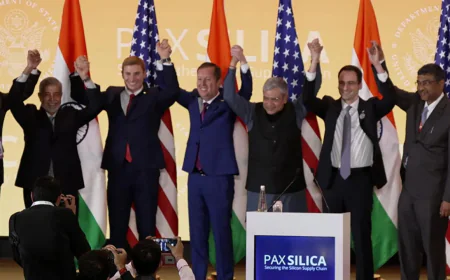
The list of guests of the summit highlights its geopolitical and economic importance. The world leaders in technologies in Google, NVIDIA, Microsoft, OpenAI, and DeepMind will be placed alongside the most influential industrialists and architects in India. It is the intersection of these three factors (the scale of democracy, the digital public layer, and the depth of the market) that make India unique. Roundtables of CEOs and plenaries of leaders should influence the flows of investments, AI supply chains and shared research priorities. More importantly, situated in the Global South, this summit will make Western capitals rethink their long-term control over defining AI standards. India is not simply engaged in global AI governance, but is also creating new frames of reference who is entitled to set priorities and whose problems AI is intended to address.
The Deloitte Innovation Center
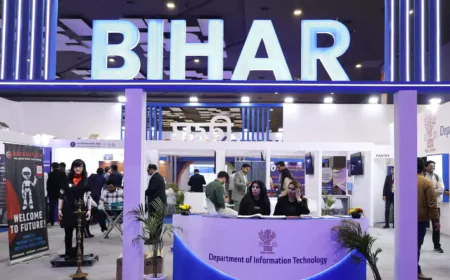
The main hallmark of the summit is the focus on inclusive innovation. Issues like AI for ALL, AI by HER, and YUVAi directly address the systemic failure: urban inequality, gender disparity in technology leadership and access to innovation platforms by the youth. Having prize pools in the crores, these programs are aimed at turning talent into deployable solutions instead of prototypes that never scale. This intent is supported by the massive AI Impact Expo, where more than 500 startups are located on 70,000 square metres that connects innovation with markets and adoption in the public sector. The implicit message is obvious: the future credibility of AI is determined by its creators, beneficiaries, and the ability to address actual issues on the bottom-up level.