













Lok Sabha Adjourned After Clash Over Rahul Gandhi’s Citation of Unpublished Army Chief Memoir
Lok Sabha was adjourned after a heated clash between Rahul Gandhi and the government over quoting alleged excerpts from former Army Chief MM Naravane’s unpublished memoir, raising national security and parliamentary procedure concerns.


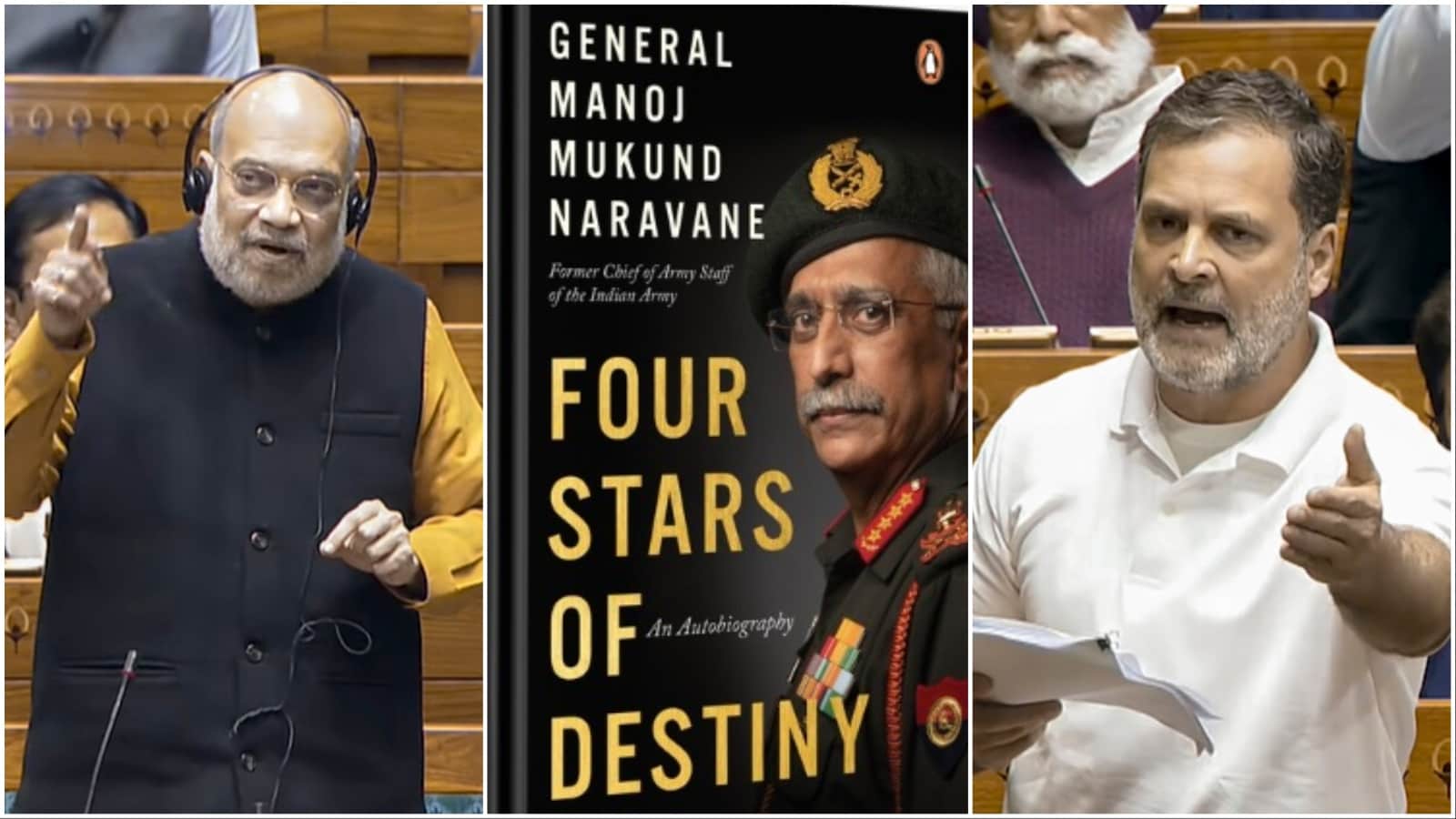
The Lok Sabha adjourned on February 2, 2026, after being severely disrupted once again by a sharp confrontation between the government and Leader of the Opposition Rahul Gandhi when the Motion of Thanks on the President's Speech was debated. The scandal occurred when Gandhi tried to reference supposed quotes of an unpublished memoir of former Army Chief General M.M. Naravane, Four Stars of Destiny, to declare national security issues associated with the 2017 Doklam standoff. The government took procedural objections stating that the material was untested and unpublished. In spite of several warnings by the Chair, Gandhi continued and the three adjournments were made before the day was ultimately suspended due to growing tensions over parliamentary norms and narratives on national security.
The Rulebook Argument and Government Pushback
A well-organised objection was then put forward by the ruling party, headed by Defence Minister Rajnath Singh, and Home Minister Amit Shah, who demanded that in parliamentary practise the authority of a member to call as an authoritative witness unpublished or unauthenticated documents is not admitted. They insisted that giving them the go-ahead might be a dangerous precedent particularly in delicate defence issues because it would be becoming an authorization to give credence to claims not proven by the state. The same stand was supported by Speaker Om Birla who kept pointing out to the House that there are rules designed to safeguard institutional credibility and national security. On the part of the government, it did not mean repression of debate and more achieving procedural discipline within the Lok Sabha.
The Stand of Rahul Gandhi: National Security, not Procedure
Rahul Gandhi, though, put the face-off in the context of a substantive national security discussion, as opposed to a technical violation of the rules. Relying on a magazine report that purportedly used the memoir, he alleged that Chinese tanks had entered Indian territory at Doklam and sought to capture a strategic ridge, an allegation he alleged needed critical attention. Through his persistence when objections were raised consistently, Gandhi was attempting to place himself in a position of challenging what he termed the governmental transparency on China. Opponents such as the BJP charged that he politicised defence matters and lied to the House out of unverified allegations. Proponents responded that procedural objections were being made a scapegoat to escape awkward questions, which points to the ongoing clash between transparency and formal parliamentary restrictions.
The Memoir in Waiting and the Greater Politics
The main issue in the controversy is the memoir that General Naravane released and allegedly discussed key events such as Doklam, and the fight in the Galwan Valley in 2020. The book has spent more than 18 months in clearance by the Ministry of Defence which Gandhi used to load outside Parliament to doubt what the government was trying to do. The BJP denied this story claiming that military memoirs are subject to routine vetting in order to avoid leaking sensitive information. On the political front, the episode is indicative of a larger trend, namely the opposition taking the fight on matters related to China, and government retaliation through institutional and procedural defence. The adjournment was not, then, just concerning a book, but of control of the national security discourse.