




































57 New Kendriya Vidyalayas to Boost Access to Quality Education
The Union Cabinet’s decision to approve 57 new Kendriya Vidyalayas (KVs) with a ₹5,862 crore investment marks a significant push towards inclusive, quality education in India. The move is expected to bridge gaps in rural and semi-urban areas while strengthening the foundation of India’s public schooling system.


A Major Step in Strengthening School Infrastructure
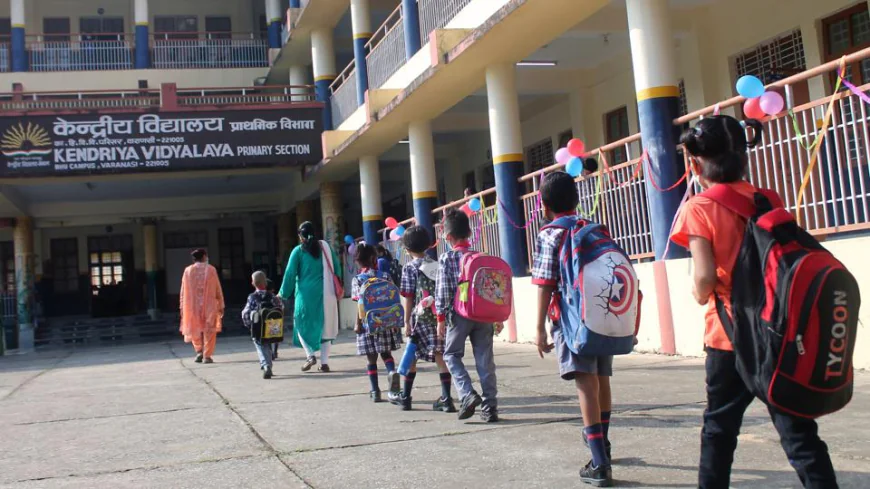
For decades, Kendriya Vidyalayas have stood as a benchmark for affordable, quality education under the central government’s umbrella. With over 1,200 schools already operational, the network serves children of government employees, defense personnel, and increasingly, local communities. The addition of 57 new schools is not just about expanding numbers it is about reaching pockets of the country that continue to remain underserved.

Investment in India’s Future
The sanctioned outlay of ₹5,862 crore reflects more than financial commitment. It represents a vision where education is not restricted by geography or economic background. Many of these new schools are expected to be set up in tier-II and tier-III cities, as well as remote districts, where children often lack access to modern classrooms, trained faculty, and extracurricular facilities.
The move will also create opportunities for local teachers, staff, and ancillary workers, adding to job creation in the education sector.

Bridging Inequality Through Education
India’s education sector continues to grapple with wide disparities—between urban and rural schools, between private institutions and public ones. Kendriya Vidyalayas have historically managed to reduce this gap by offering CBSE-based education with strong emphasis on academics, sports, and cultural activities.
For many parents in small towns, a KV represents the promise of holistic growth without the burden of high private school fees. This expansion will provide that hope to thousands of new families.
Challenges Ahead
While the announcement is promising, successful implementation will depend on timely construction, teacher recruitment, and sustained funding. Past experiences show that infrastructural delays and shortage of faculty often slow down the benefits of such initiatives. Ensuring that these new schools are fully functional and well-equipped will be the key to realizing the Cabinet’s vision.
Conclusion
The approval of 57 new Kendriya Vidyalayas is a welcome development in India’s education journey. It is not just an investment in buildings and classrooms, but in the dreams of children across India who deserve equal opportunities to learn, grow, and thrive.