



































When 27 Lakh Workers Disappeared: Inside the MGNREGA Deletion Shockwave
Shockingly, as many as 2.7 million MGNREGA workers were removed from the system within just 35 days, which has led to questions being raised about their digital exclusion, problems with Aadhaar, and the eventual fate of rural employment security.

Introduction
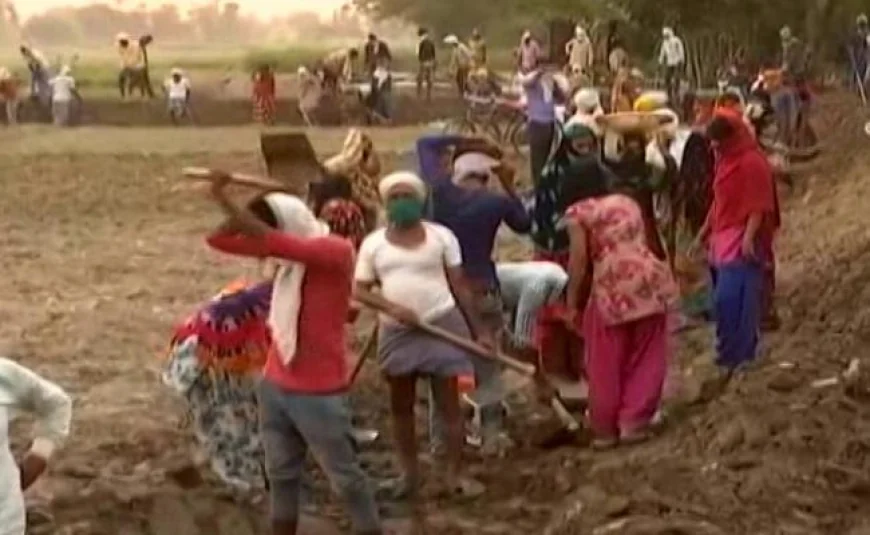
Rural employment in India, which is significantly dependent on the MGNREGA scheme, is in a state of shock after it was discovered that the records of nearly 2.7 million MGNREGA workers were wiped out within 35 days, precisely between 10 October and 14 November. This abrupt and large-scale deletion of names has raised concerns about transparency, accountability, and the increasing digital divide in rural areas.
A Sudden Vanishing Act
The fact that such a huge number of people had their names deleted in less than a month has made people all over the country wonder what is going on. These deleted workers are not just anonymous database entries - they are the rural poor who, in many cases, live off the daily wages they get through MGNREGA. The disappearance of job cards without any prior intimation has left many people in a state of disbelief.
Aadhaar and the Digital Hurdle
The single most important factor driving the change is the increasing reliance on the Aadhaar-Based Payment System (ABPS). However, millions of workers continue to experience this mismatch between their Aadhaar details as well as bank information, the biometric authentication of their accounts, and in some cases, it is just that the local branch is not equipped to the worker in question. To that extent what is meant to be a solution to streamline payment because of the introduced technology has taken the form of a barrier for those who are users of the technology. For these workers in the most far-flung areas, even the 'simple' task of updating Aadhaar can be very difficult.
Wrongful Deletions: A Worrying Pattern
Several labor groups have alleged that a great number of these deletion cases, especially those wrongful or premature, have been their points of concern. And it is said that numerous job cards that were associated with those workers have been credited to the ones who recently conducted their jobs, and yet they were considered as duplicated or inactive ones. The advocates of the rural people assert that the absence of proper physical verification will certainly lead to people who are already entitled to the benefits being deleted alongside this mass cancellation of beneficiaries.
The Human Impact No One Talks About
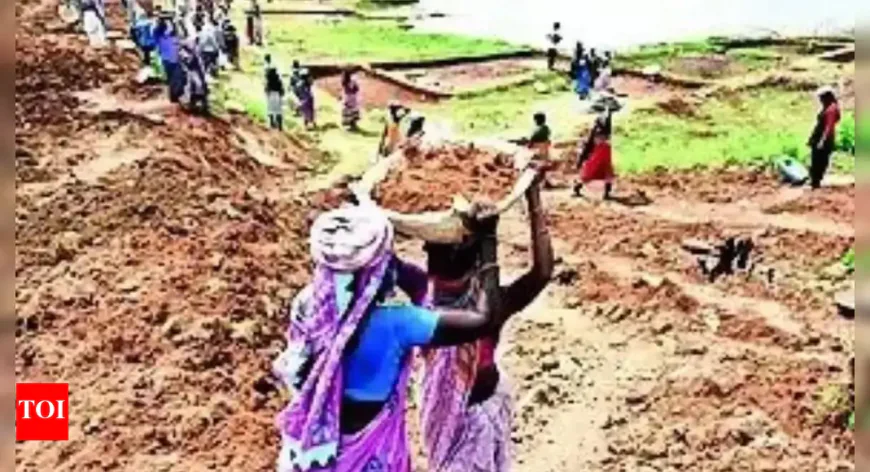
Misplacement of a job card does not only hinder earnings from the scheme — it is the elimination of a family's safety net. An already existing problem of wage delay is now further complicated with the issue of job cards getting deleted that is why many workers have lost out on overdue wages, which in turn cuts off their job access, and their legal 100-day employment guarantee. The unemployment situation in rural areas is on the rise, so if there were only a handful of days of delayed wages, then these people would become seriously distressed.
Government Response & The Road Ahead
After the revolt, the government is said to have reacted by setting instructions for the better verification of citizens, notifying the public, and providing a certain appeal system. But it is their drop-in effect that really matters here and that is where the real test is.
Conclusion
The massive deletion of workers in the MGNREGA scheme basically communicates that it is not only about cleaning up the data - it reveals how digital systems that have good intentions can inadvertently exert the worst kind of silence on the poor which is the lack of voice. If MGNREGA is to continue being a source of income in rural areas then reforms will have to place their priorities on people rather than on data.