






















The Great Ballot Heist? How Vote Theft Claims by Rahul Gandhi Are Stirring India’s Democracy
Rahul Gandhi has blamed the BJP for a systematic 'vote theft' in MP and Chhattisgarh and has been accused of escalating the electoral drama as well as raising alarm over the democratic integrity.

A Bold Allegation That Shook the Ballot Box
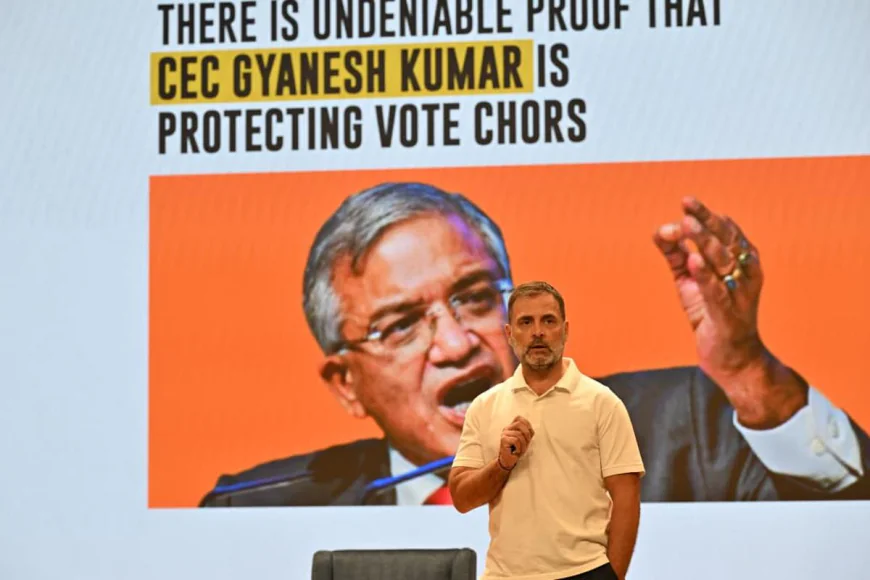
In his sharp-edged press conference in Panarpani, Madhya Pradesh, Rahul Gandhi not only attacked the ruling Bharatiya Janata Party (BJP) but also the Election Commission of India (EC), and suggested that the situation observed in the Haryana elections is a mere facade for a larger plan. He said that the "vote theft" in Haryana was just a cover-up by which the same incidents were happening in Madhya Pradesh, Chhattisgarh, and Maharashtra.
What Is the “Vote Theft” Charge?
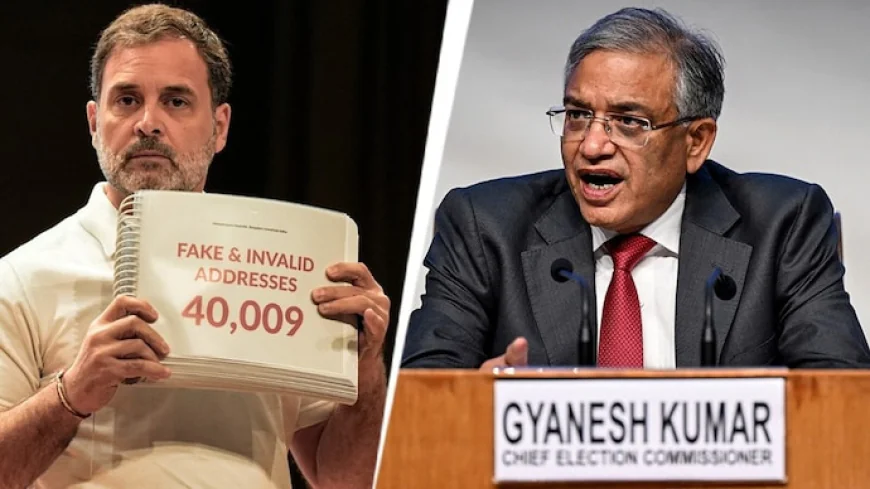
Gandhi dramatized the scenario before the audience: he alleged that the number of fraudulent entries for the electoral roll of Haryana was 25 lakh (2.5 million), that a 'Brazilian model' image appeared 22 times at 10 different booths under different names, and that voter-roll revision was orchestrated via his "Operation Sarkar Chori" premise.
According to him, “If the voter list is a lie, then there is no democracy.”
Why the Accusation Matters for Democracy
The charges made are the ones that challenge democratic legitimacy most directly. If the electoral rolls are full of discrepancies or are doctored, then the foundation for free and fair elections - the principle of one person one vote - is in danger. Besides, Gandhi did not only blame BJP’s top leadership (he mentioned Narendra Modi and Amit Shah) for the wrongdoing but also charged the Commission with institutional collusion.
BJP and EC Hit Back
As one would expect, the BJP termed all accusations as “false and baseless” and blamed Gandhi for defaming India’s institutions so that no one notices his party’s plights. Several union ministers branded the act as “youth instigation” and “lack of trust in judiciary.”
The Election Commission, on the other hand, denied the charges as “baseless” and emphasized that neither appeals nor formal complaints had been lodged disputing the roll revision process.
What’s Next?
He intends to disclose more proofs stage by stage, thus not limiting his criticism to a mere one-time exposure but rather as a prolonged pressure strategy. On the other hand, BJP and EC are maintaining their stance and therefore the scenario is now set for a face-off of claims vs. counterclaims and a wider discussion on electoral transparency.
Why You Should Care
This could matter to you whether you are a democracy student or just a concerned citizen, because these developments emphasize the very crucial point which election is not only about who votes but also how and whether those votes are treated properly. When a leading figure of the opposition topples the system shouting that there are frauds, this is a wake-up call for all of us to rethink the sturdiness of our institutions.