


































World Bank Sanctions $286 Million Loan to Transform West Bengal Healthcare
The World Bank has approved a $286 million loan to reform West Bengal’s healthcare system, focusing on NCD management, maternal and adolescent health, patient-centric care, gender-based violence services, and climate-resilient health infrastructure across the state.


In a major development for public health in India, the World Bank has approved a $286 million loan to support the West Bengal Health System Reform Program Operation, aimed at improving quality of life and increasing life expectancy across the state. The loan was cleared by the World Bank’s Board of Executive Directors on January 15, 2026, and will be implemented across West Bengal, benefiting over 90 million people. The program focuses on tackling lifestyle diseases, strengthening maternal and adolescent health, improving patient-centric care, expanding gender-based violence services, and making health facilities resilient to climate shocks.
Fighting Silent Diseases and Protecting Mothers
One of the greatest challenges that is facing West Bengal today is the increasing burden of non-communicable diseases (NCDs) such as hypertension and diabetes. Often referred to as "silent killers," these conditions tend to grow unnoticed until serious damage has been done. Under the new programme, a digitally tracked, personalised healthcare will be provided to people aged 30 and above, and will provide for early detection, regular follow-ups, and continuity of treatment through strengthened primary health centres.
Alongside this, special attention will be given to maternal and adolescent health in five high burden districts viz. Purulia, Birbhum, Murshidabad, Maldah and Uttar Dinajpur. These regions have long had to struggle with healthcare access and results. The programme focuses on enhancing reproductive, maternal, and adolescent care so that childbirth is safer and young girls are supported by timely, quality medical care. For families here, this reform could be a long-awaited safety net finally being in place.
Patient-Centric Care, Safety, and Climate Resilience
The reform really represents a significant transition to a patient-centred healthcare system. Instead of just looking at infrastructure or service numbers, there will be a measurement of real health outcomes in this programme. Governance systems will be strengthened to ensure accountability, transparency and better service delivery. Healthcare in this model is not simply about treatment, but trust and experience.
A critical and sensitive component of the reform is the scale up of gender-based violence (GBV) response services. Hospitals and healthcare workers will be trained in the identification, support and care of survivors of violence. By integrating GBV services into the health system, the programme seeks to convert the hospitals from a place of silence into a safer space to heal.
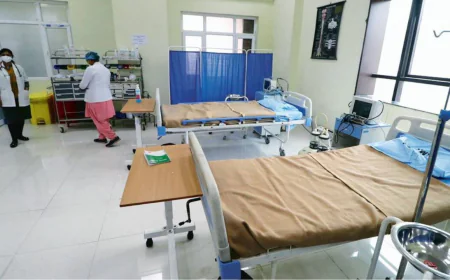
Another important focus is climate resilience. With floods, heatwaves and extreme weather becoming more common, the programme intends to upgrade healthcare facilities so that they can continue to function in climate emergencies. This is an important step for susceptible and disaster-prone areas where access to healthcare tends to break down when it is most needed.

Funding Linked to Results and the Road Ahead
The $286 million loan is provided by the International Bank for Reconstruction and Development (IBRD) with 16.5-year maturity and 3-year grace. Unlike traditional funding, this programme is based on a performance-based financing model, in which funds are released only after proven improvements and measurable results are achieved. In short, results will speak louder than plans.
As the programme is in the first phase, the next few months will be spent on launching digital health systems, beginning targeted interventions at the district level, strengthening GBV services, and upgrading health infrastructure. While there may not be any immediate visible changes, the seed is being sown for long-term transformation.
If implemented successfully, the West Bengal Health System Reform Programme Operation can transform the notion of public healthcare in the state - to become closer to the people's daily life and to build resilience and ensure that quality healthcare is not a privilege but a right.