





































New Way to See Tiny World: Caltech's Big Find with a Microscope Lets Us See What Was Not Seen Before
Researchers at Caltech developed a new type of microscope that can capture these tiny movements in real-time, providing an unprecedented view into the dynamic life of small particles that were never seen before.

In 1905, Albert Einstein, then a young man, wrote a work that helped us understand why tiny bits in water move in odd ways—we call it Brownian motion now. He showed that this dance was from many small hits with unseen bits around them, always on the move. His idea gave us a new way to view the tiny world, but to really see those small moves was still not something we could do—until today.
In a big step, people at Caltech made a new kind of microscope that can show these tiny moves as they happen, giving us a view into the active life of tiny bits never seen before. They put their work out in the Nature Communications journal.
A Small-Scale Movie Like No Other
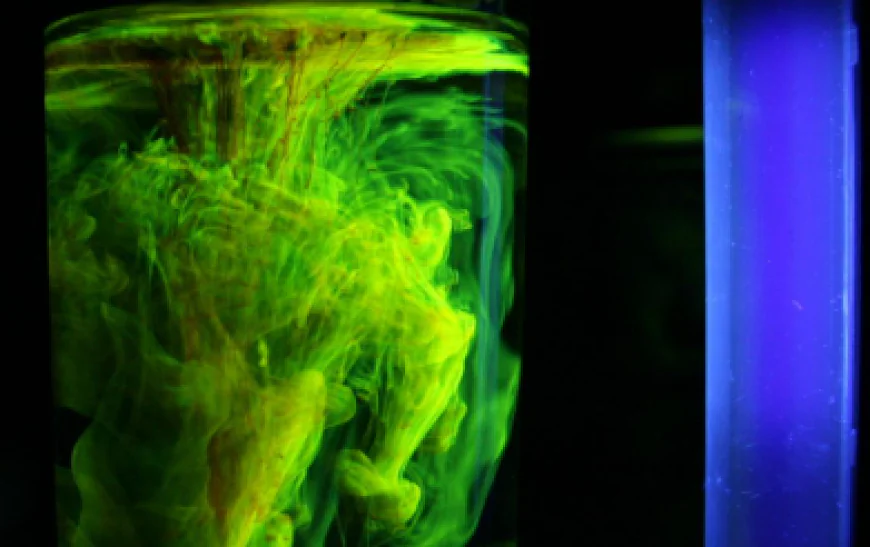
Each small part is hard to see because they are very tiny. Most are just a bit big (one bit is so small it is hard to imagine), much tinier than what normal good-seeing tools can show. Also, old ways to see them needed marked juice or marks, and that could make the parts act weird when being watched.
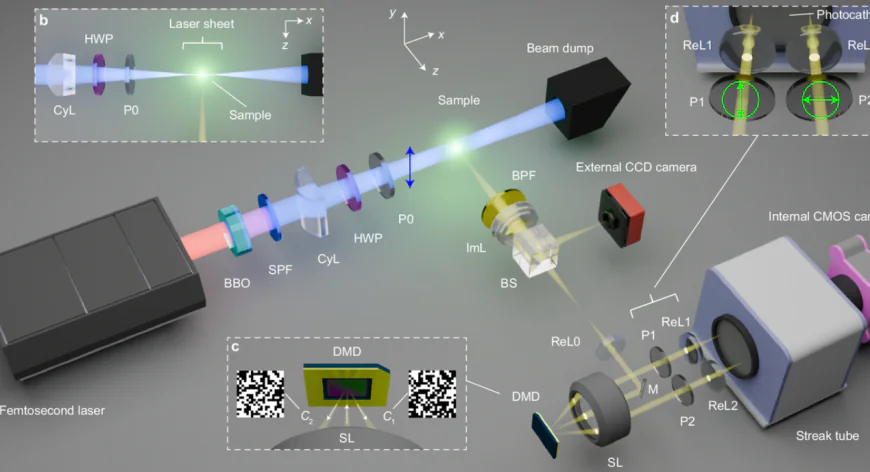
But Caltech's new way avoids that problem. It doesn't try to look at the parts directly. Instead, the tool sees them by noting how they mess with light. The tool uses a laser light line, set just right, a device (DMD) to shape the light, and a camera that sees small changes in how light moves or comes back from the parts.
These shifts come from what the bits do—spin, twist, or slide—that messes with the light’s path. The camera sees these shifts as things we can see, making it clear what goes on at the tiny level.
Why it's Important
This new tool will change much. Since it does not cut or harm, it lets people watch tiny bits of matter as they are, with no added stuff. This means big new ways to learn in life, study, stuff study, push and pull laws, and healing study.
For example, a big problem in life study is how body bits fold. Wrongly folded body bits can lead to bad ills like Alzheimer’s and Parkinson’s. With this tool, one can watch how body bits move and twist as they happen, which may help find sick parts early or make new cures.
In stuff study, the tool could show how tiny bits of stuff act when squeezed or made hot, which could lead to new things in power holding, power use, or tiny tech.
A New Time for Looking at Tiny Bits
This big find at Caltech is not just a better tool—it's a new way to see life at its core. It mixes looking, push and pull laws, and math into a tool that could change how we know the tiny bits of stuff.
What Einstein once saw in math, we can now see with our eyes—tiny bits moving, right now.