






































Chinese Satellite’s Low-Power Laser Tech Surpasses Starlink Performance
China has demonstrated a low-power laser data link from geostationary orbit. It’s promising for secure space communications, but not a Starlink replacement.

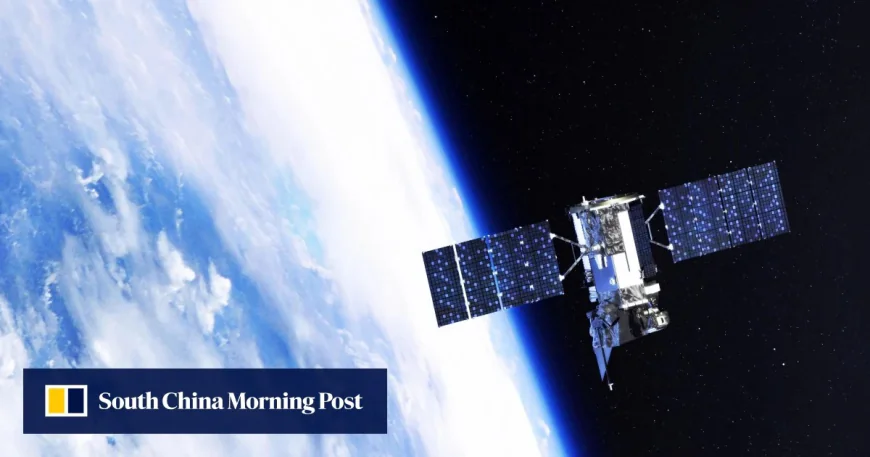
A recent report claims a Chinese satellite sent a laser signal from geostationary orbit,about 36,000 km above Earth,to a ground station while carrying a high-speed data stream. The headline number that grabbed attention was power: just 2 watts for the laser downlink, roughly the draw of a small nightlight. If the test holds up under wider conditions, it points to a different way of doing satellite communications: fewer satellites, higher orbit, and optical (laser) links instead of traditional radio.
Why lasers are hard from space
Laser communication sounds simple, shine a beam, send data,but Earth’s atmosphere makes it messy. Turbulence can distort and scatter the light, which hurts data reliability. According to the report, researchers used a combined method often described as adaptive optics plus multi-channel reception. In plain terms: the ground telescope “reshapes” the incoming beam in real time using a dense set of tiny mirrors, then splits the corrected light into multiple paths and chooses the strongest channels for decoding. The article cites a peer-reviewed paper in Acta Optica Sinica and claims this approach improved the usable signal rate compared to older setups.
Does this “beat Starlink”? Not exactly
It’s tempting to compare the reported 1 Gbps test link with Starlink’s consumer speeds, but they’re solving different problems. Starlink’s big advantage is low latency because it operates in low Earth orbit. Geostationary systems naturally add noticeable delay,often a few hundred milliseconds round-trip,because the signal travels much farther. That delay matters for gaming, video calls, and real-time control, even if raw download speed is high.
Where this could matter most
Optical links have real upsides: narrow beams can be harder to intercept and less affected by radio spectrum congestion. That makes them attractive for military communications, scientific data return, and deep-space links. The bigger challenge is scaling: laser systems need compatible ground stations, strong tracking, and better performance in clouds and heavy haze.
So, this isn’t “Starlink getting replaced overnight.” It’s more like a sign that space communications may split into lanes,LEO for low-latency consumer internet, and high-orbit laser links for specialised, secure, high-throughput connections.