




































Nvidia Unveils Alpamayo AI for Self-Driving Cars at CES 2026
The Alpamayo AI models that Nvidia released at CES 2026 are a big step forward in self-driving technology. They open up a new way for cars to think like humans while they're on the road. The company may be changing how autonomous systems are made by combining open-source models, big datasets, and simulation tools. This could speed up innovation and allow more people in the industry to take part.

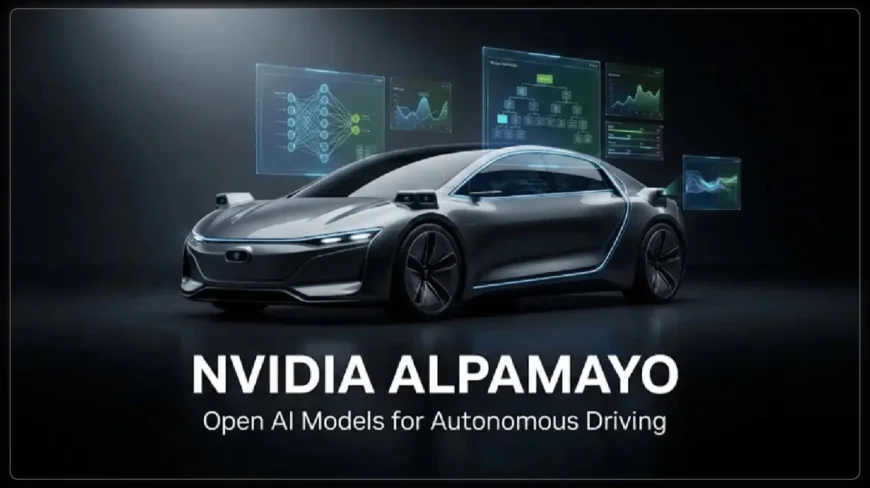
Nvidia Introduces Alpamayo AI to Make Autonomous Vehicles Think Like Humans
At CES 2026, Nvidia unveiled the Alpamayo AI suite — open-source reasoning models and tools designed to help self-driving cars handle complex road scenarios more safely and intelligently.
Nvidia, a world leader in AI hardware and software, showed off a big step forward in self-driving car technology at the 2026 Consumer Electronics Show (CES) in Las Vegas. The company released the Alpamayo family of open-source AI models and tools, which are meant to help self-driving cars think and react to complicated driving situations more like people do.
This news marks a change in strategy away from traditional systems that are based on perception and towards "physical AI," in which vehicles not only see their surroundings but also understand and respond to them in a smarter way. Jensen Huang, CEO of Nvidia, called the news a "ChatGPT moment for physical AI," pointing out that it could speed up innovation in self-driving cars.
What is Alpamayo AI from Nvidia?
The Alpamayo portfolio is a group of open-source AI parts that are meant to help self-driving cars solve some of their most difficult problems. Alpamayo 1 is its main part. It is a vision-language-action (VLA) model with about 10 billion characteristics. Alpamayo 1 is different from other machine-learning systems because it uses both video and sensor inputs and applies chain-of-thought reasoning to look at possible future scenarios and make safer choices.
Nvidia also launched AlpaSim, an open-source simulation framework that lets developers test how vehicles behave in environments that are very close to reality.
Real-world AI Open Datasets is a huge collection of more than 1,700 hours of real-world driving data from all over the world and in a wide range of situations.
These tools can be found on public developer platforms like GitHub and Hugging Face. This means that researchers and automotive engineers can change and train the AI for particular tasks without having to start from scratch.
Why This Is Important for Technology That Drives Itself
The "long tail" of rare, uncertain driving situations, like strange traffic patterns, sudden changes in how pedestrians act, or unexpected road conditions, has been one of the biggest problems for self-driving cars. Pattern-recognition-based systems may not be able to handle these situations well because they don't have enough data or make decisions too quickly.
Nvidia's method lets vehicles evaluate events gradually and choose safer paths to take by building in reasoning abilities. This could help future self-driving cars deal with the challenges of the real world, making them more reliable when they're not in a controlled test setting.
What the industry did and what the future holds
Partners in the industry, such as automakers and research institutions, have already shown support for Nvidia's open tools. This could make it easier for many companies to add to the development of AI and benefit from it.
Analysts say this move shows that the self-driving car business is moving more and more towards open, clear AI systems that can be used by many and improved by everyone working together. But as technology moves quickly forward, there are still concerns about monitoring, regulation, and safety certification, especially as these systems get closer to being used in the real world.