


































VB-G RAM G Bill Passed: What Replacing MGNREGA Means for Rural Employment in India
VB-G RAM G Bill replaces MGNREGA, raising rural job guarantee to 125 days and reshaping funding and development goals. Here’s what it means.

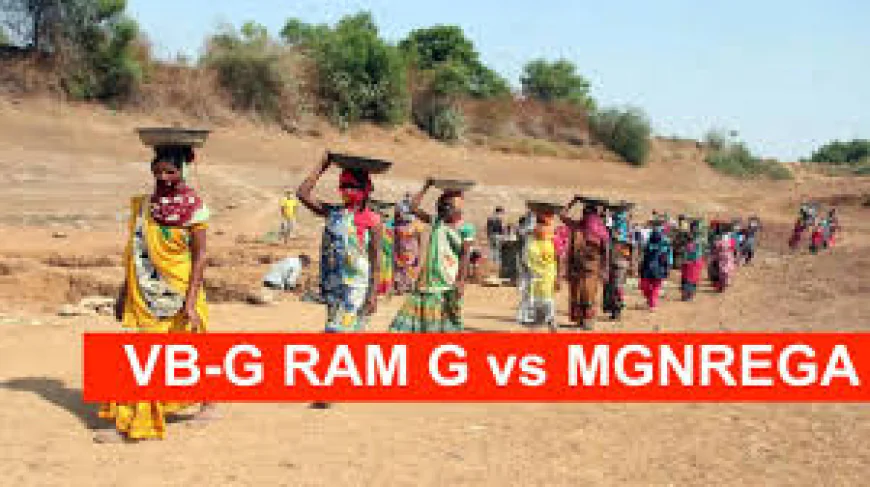
India's rural job system is going to change a lot now that the VB-GRAM G Bill, 2025, was passed by Parliament. This bill officially replaces the Mahatma Gandhi National Rural Employment Guarantee Act (MGNREGA). The new law, formally called the Viksit Bharat—Guarantee for Rozgar and Ajeevika Mission (Gramin), seeks to make hiring in rural areas more modern and in line with the goals of long-term development.
The bill's promise of more scheduled workdays is one of the biggest changes it brings
With the new system, rural households that meet the requirements can get up to 125 days of work each year, instead of the 100 days that MGNREGA offered. The government says this expansion meets the wants of more people in the countryside and helps them reach their goal of making India a "developed India" by 2047.
Another important change is in the money. MGNREGA mostly worked on a demand-driven model, but the new bill changes that and brings a structured funding approach. This means that the Centre will give money based on certain clearly defined criteria. States will have to pay for extra things that are needed. Supporters say it could help with better financial control, but critics say it might hurt states that are poorer.
The VB-G RAM G Bill also connects jobs more directly with making money and supporting one's family
People will get jobs that are linked to projects like climate-resilient infrastructure, water conservation, rural connections, and community assets. Planning will be done at the village level, with the goal of making sure that the work that is done also helps the community grow in the long run.
There was a lot of debate about the bill's passing. Opposition parties strongly disagreed with replacing MGNREGA, saying it was an attack on a major welfare program and its heritage. There were protests in Parliament, and people who don't like the new system are asking if it really makes job promises stronger.
As India moves to this new system, the real test will be how it is put in place. The VB-G RAM G Bill promises to do a lot, but whether it really delivers depends on how well states adjust, how funds are spread out, and how jobs get to rural homes.