






























Today in AI: Google's Story Illustrator, Microsoft's Malware Detector, and OpenAI’s Advice to Students
Google has released a new AI tool to help visualize stories, particularly aimed at children's books and educational materials.

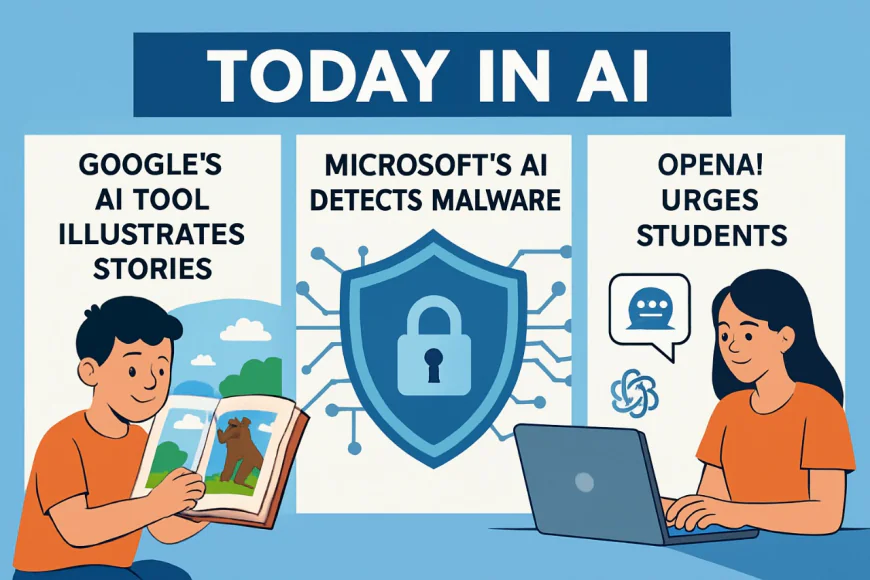
Artificial Intelligence continues to reshape everyday technology at an accelerated pace. In today's round-up of AI, we take a look at how Google, Microsoft, and OpenAI are expanding the limits of what's possible, from storytelling to malware protection to education.
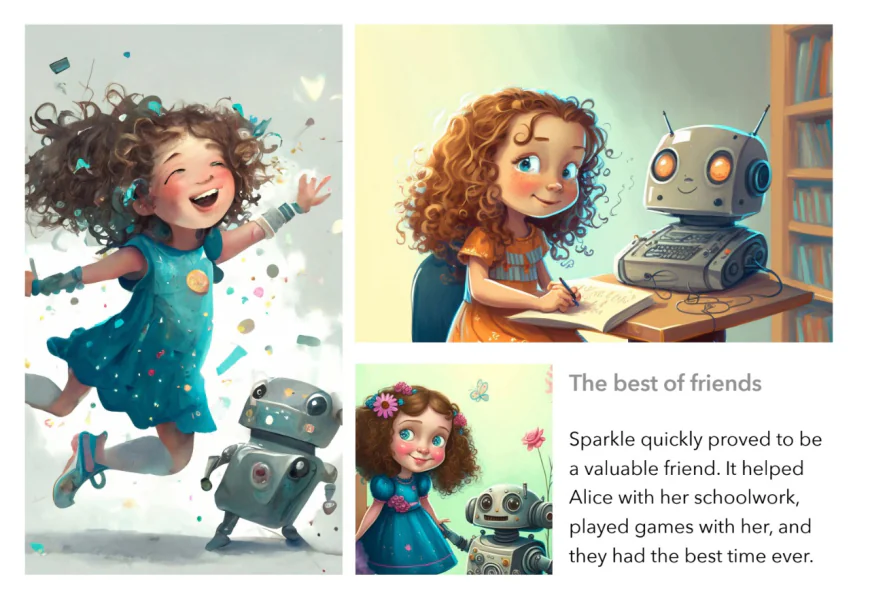
Google now has an AI tool that can illustrate stories
Google has released a new AI tool to help visualize stories, particularly aimed at children's books and educational materials. When you enter text, the tool generates images to illustrate the story in the words provided. Authors, teachers, and content creators can now quickly transform stories, lesson plans, and narratives into image-rich storytelling without the skills of a graphic designer.
This new tool works off the new generative models developed by Google, Imagen, and trained by billions of large models. These generative models must understand the narrative and better accommodate stylistic cues, but the next step towards tapping can produce images that support plot development, emotion, and scene sense making. The potential for this tool to create story illustrations might be a game changer in both education and self-publishing work.
Microsoft Uses Artificial Intelligence to Identify Malware in Real-Time
To keep pace with increasingly sophisticated cyber threats, Microsoft has launched a malware detection system that uses AI technology. The new tool can identify ambiguous behavior, across numerous devices and networks, in real-time and provide alerts against prospective dangers before the opportunity to inflict damage.
The new comparative malware detection system utilizes deep learning models that have been trained on millions of malware signatures and behaviors, meaning the new security tool is able to identify malware that the developer has not seen before. With Microsoft integrating AI technology into the security ecosystem, it is a significant advancement in the detection of cyber threats and achieving proactive cyber security. For both enterprises and individual users having better protective measures and faster incident responses with straightforward and intelligent automation is extremely positive.
OpenAI Challenges Learners to Use AI Responsibly
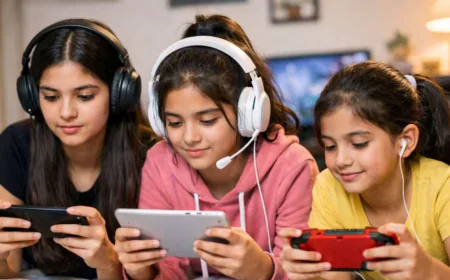
With more AI tools like ChatGPT becoming accessible to students, OpenAI has provided updated guidelines to encourage learners to take ownership of AI use in their academic lives. While AI can be a great resource for supporting learners with brainstorming, conceptualizing difficult topics, or language practice, it should never replace critical thinking or original content.
OpenAI has also worked with education partners on developing best practices for educators, encouraging teachers to teach learners about how to use AI in ethical ways. Part of the process involves educating learners about how and when AI should be used, understanding limitations, and avoiding plagiarism.
The bottom line is that AI should empower learners, not do the learning for them.
Final Thoughts
Today's presentations demonstrate how artificial intelligence is changing how we learn, create, and protect our safety. With industry titans driving innovation, it's imperative for users, be they authors, professionals, or students, to be informed and to use these tools responsibly. As artificial intelligence continues to saturate our lives, personal responsibility will be vital in leveraging the benefits while reducing our risks.