





































Why Meghalaya’s Once Crystal-Clear Umngot River Is Turning Murky
Meghalaya’s iconic Umngot River, famous for its glass-like clarity, is losing its pristine sparkle. A rise in human activity, unchecked construction, waste disposal, and climate-driven changes are slowly turning the river murky. This article explores the causes, the lived experiences of locals, and the urgent need for mindful conservation.

A River Once So Clear It Felt Unreal
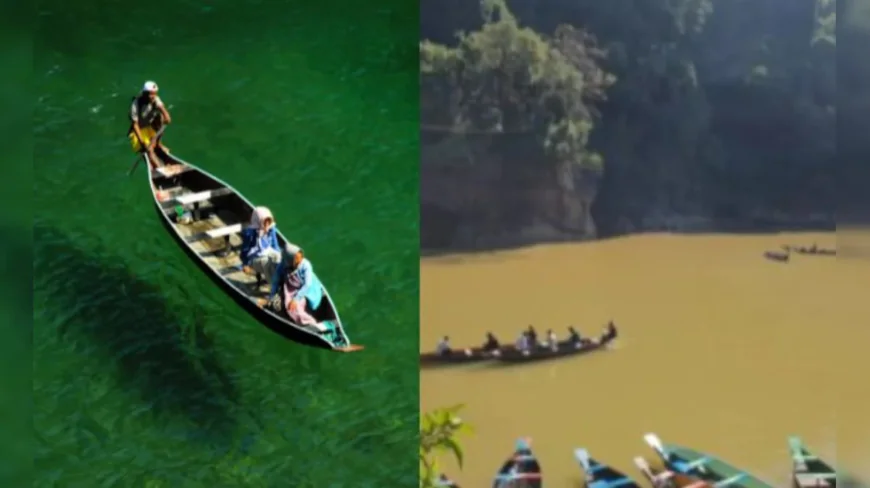
For years, the Umngot River at Dawki has been more than just a tourist attraction; it has been a symbol of nature’s quiet perfection. Visitors often described it as a sheet of transparent glass, where boats looked like they were floating in air. The river didn’t just draw tourists its purity shaped local pride and livelihoods.
But in recent seasons, something has changed. Locals say the water no longer glows with its famous emerald clarity. Instead, they see dullness creeping in, especially after rainfall or days of heavy movement along the shore.
What’s Turning the River Murky?
1. Construction and Road Expansion
As tourism grew, so did the need for better roads, parking spaces, and hotels. Continuous construction near the riverbanks loosens soil, and every rainfall washes sediments directly into the water. What used to be tightly held by thick vegetation is now exposed earth slipping downhill.
2. Rising Tourist Footfall
Dawki sees thousands of visitors during peak season. While tourism brings jobs for boatmen, shopkeepers, and guides, it also increases pressure on the delicate ecosystem. Plastic bottles, food packets, and waste often find their way into the river, especially on busy weekends.
3. Sand and Boulder Extraction
Some stretches have witnessed unregulated sand and stone extraction. Even small-scale removal disturbs the riverbed, releasing fine particles that cloud the water. Over time, this disrupts fish habitats and alters water flow.
4. Climate Change and Unpredictable Rainfall
Meghalaya has always had heavy rain, but the pattern is shifting. Intense, sudden downpours send huge amounts of run-off into the river, carrying mud and debris. The Umngot’s natural cleansing rhythm is getting overwhelmed.
Local Voices Express Concern
For the boatmen who’ve spent a lifetime rowing tourists across the clear waters, the change feels personal. Many say the river no longer reflects the sky like a mirror. Some fear that if the clarity is lost, tourist numbers—and their livelihoods—may also drop.
Saving the Umngot: Still Possible
The river can recover, but only through shared responsibility. Limiting construction, restoring green cover, managing waste strictly, and monitoring extraction activities could help the river breathe again. The Umngot doesn’t need grand solutions—just careful, consistent protection.