





















Rahul Gandhi’s Germany Visit Sparks Fresh Debate On Indian Manufacturing
Rahul Gandhi’s visit to a BMW manufacturing facility in Germany has reignited political debate in India. While the Congress leader highlighted concerns about India’s manufacturing ecosystem, the BJP responded with a detailed fact check, accusing him of selectively presenting facts. The episode reflects the larger political tussle over jobs, industrial growth, and India’s global manufacturing ambitions.

A Factory Visit With A Message
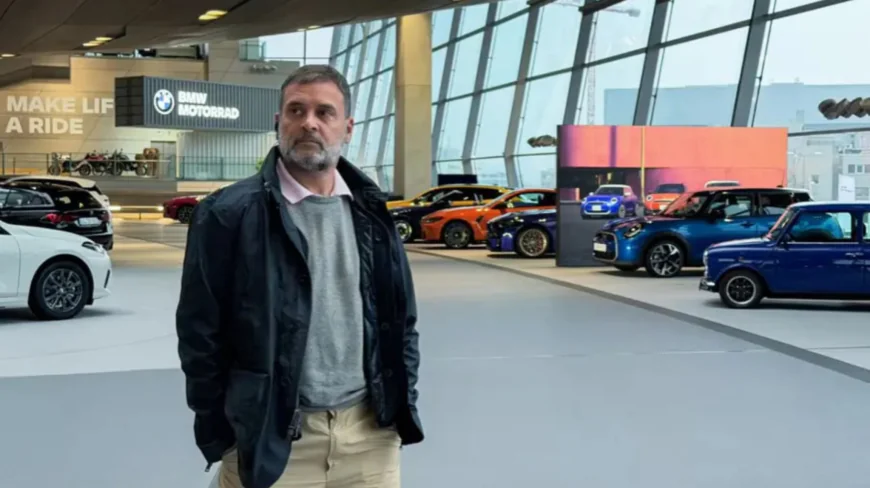
During his recent trip to Germany, Congress leader Rahul Gandhi visited a BMW manufacturing site, where he interacted with engineers and observed advanced production systems. Speaking at the facility, Gandhi pointed to what he described as a gap between India’s potential and its current manufacturing reality. He remarked that despite India’s large workforce and talent pool, high quality manufacturing jobs remain limited, pushing many skilled workers to seek opportunities abroad.
Gandhi used the visit to underline his long standing argument that India needs a stronger focus on domestic manufacturing, skill development, and innovation driven industries. According to him, countries like Germany demonstrate how consistent policy support and investment in technology can build globally competitive manufacturing hubs.
BJP’s Swift Fact Check
The remarks did not go unanswered. The BJP quickly issued a fact check, challenging Gandhi’s claims and accusing him of undermining India’s progress. Party leaders highlighted government initiatives such as Make in India, Production Linked Incentive schemes, and the rise in electronics, automobile, and defence manufacturing over the past decade.
The BJP also pointed out that global companies, including BMW suppliers, have expanded operations in India, creating thousands of jobs. They argued that portraying India as lagging ignores export growth, increased foreign investment, and the emergence of India as a manufacturing alternative to China.
Politics Meets Policy
This exchange reflects a familiar political pattern where economic narratives become tools of ideological contest. For the Congress, Gandhi’s comments align with a campaign focused on unemployment and the need for inclusive growth. For the BJP, defending manufacturing achievements is central to its claim of economic transformation and global relevance.
Beyond party lines, the debate raises valid questions. Is India creating enough high skill manufacturing jobs. Are policy incentives translating into long term industrial strength. And how can India ensure that growth reaches its vast young workforce.
A Debate Far From Over
Rahul Gandhi’s factory visit in Germany may have lasted only a few hours, but the political aftershocks continue. As India positions itself as a global manufacturing hub, such exchanges underline the importance of honest assessment alongside political rhetoric. The conversation on Indian manufacturing, much like the assembly lines Gandhi observed, is still very much a work in progress.