























Maharashtra’s Online Teaching Ban for Early Grades
In an effort to protect younger students, the Maharashtra government’s decision to ban online classes for children up to Class II is now being challenged by educationists and parents. They argue that in the current situation, guided digital interaction may be better than no connection at all. They urge the state to rethink the blanket ban and adopt a more balanced, age-appropriate online engagement policy.

A Policy Meant with Good Intent, Facing Tough Questions
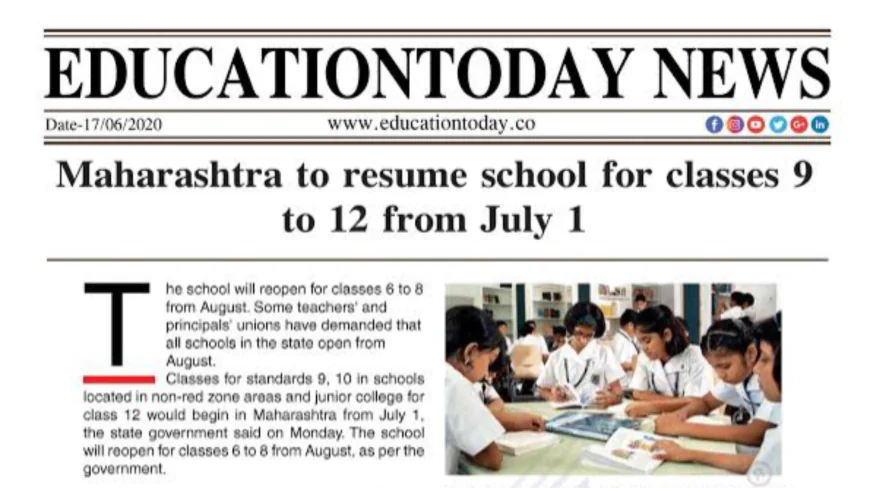
When schools shut down during the pandemic, the state government issued guidelines that all boards must not conduct online teaching for students in pre-primary and up to Class II. The idea was to avoid prolonged screen time and keep young learners from being stuck with passive video content. However, many stakeholders now believe the outcome may be counterproductive.
What Educators and Parents Are Saying
Voices from the ground are raising concerns that the ban overlooks the importance of early engagement. According to educators from the Early Childhood Association and the Association for Primary Education and Research, young children depend heavily on relationships — with teachers, peers, routines — something that can only be partially maintained via guided online sessions.
One parent pointed out that, rather than banning online connection, there should be structured, short-durations of teacher-led interaction, perhaps 30–60 minutes, to sustain social-emotional bonds and avoid children drifting into un-guided screen time.
Where the Policy May Be Falling Short
• The ban assumes that all online exposure is harmful for young children, but does not distinguish between guided, teacher-led sessions versus passive video-watching.
• With children stuck at home longer, lack of any organised school time may lead to more unsupervised tablet or mobile use — arguably worse than a well-designed short class.
• For many working parents, the absence of any scheduled interaction places an added burden: how to manage learning and engagement without school’s structure.
What a Balanced Way Forward Could Look Like
Instead of a flat ban, the state could issue age-appropriate guidelines for early-years online engagement:
• Short sessions (15-30 minutes) with live teacher interaction, not only passive content.
• Clear rules about screen breaks, manual activities, parent involvement.
• Schools given flexibility to choose safe online formats, with parental consent and involvement.
• Monitoring and feedback loops so that policy is responsive and can be modified based on results.
In short, the government’s aim to protect young children from excessive screen time is responsible but the current “ban” may inadvertently sideline them from even beneficial structured interaction. It might be time for Maharashtra to revisit the policy and find a middle path that safeguards safety andsustains learning and human connection.