


























Govt Launches SOAR Initiative to Equip School Students with AI Skills
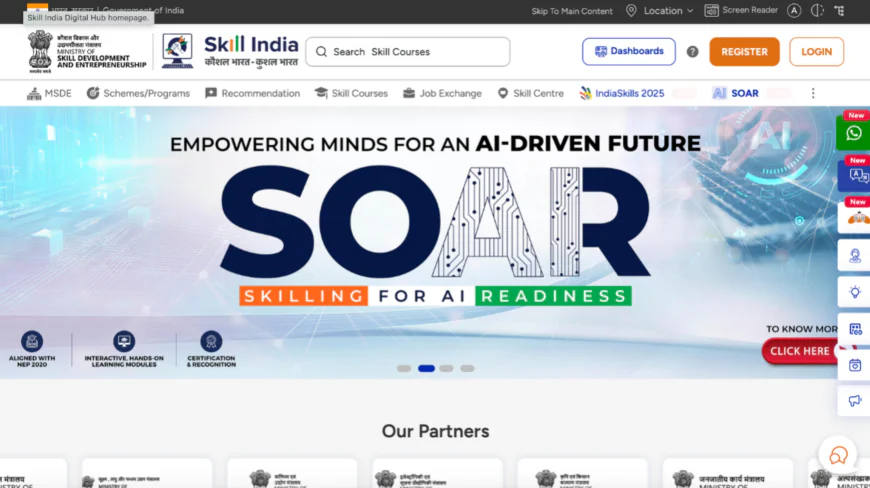
The Indian government has unveiled SOAR (Skilling for AI Readiness) — a new programme aimed at helping students of classes 6 to 12 gain foundational AI knowledge. It consists of three 15-hour modules and includes a 45-hour training course for teachers. Backed by global partnerships, the initiative is intended to bridge the digital divide and nurture future AI-ready generations.

Why SOAR? A Vision Beyond Coding
The name “SOAR” reflects more than just an acronym it signals the government’s ambition to let students rise above traditional boundaries in a tech-driven world. Rather than waiting until college, SOAR aims to introduce AI early, making it part of regular school learning. With fast technological shifts underway globally, equipping young minds with AI awareness isn’t optional anymore it’s essential.
Three Modules: From Awareness to Aspiration
The programme is structured in three ascending modules:
• AI to Be Aware: introduces basic concepts what AI is, where we already see it (recommendations, voice assistants), and helps students identify its presence in daily life.
• AI to Acquire: takes students into hands-on territory simple programming, tools, and small AI experiments to build confidence.
• AI to Aspire: explores deeper dimensions ethical issues, how AI could reshape jobs and society, and possible career paths.
Meanwhile, teachers will go through a 45-hour “AI for Educators” module, so they can support students effectively.
Bridging Gaps, Not Widening Them
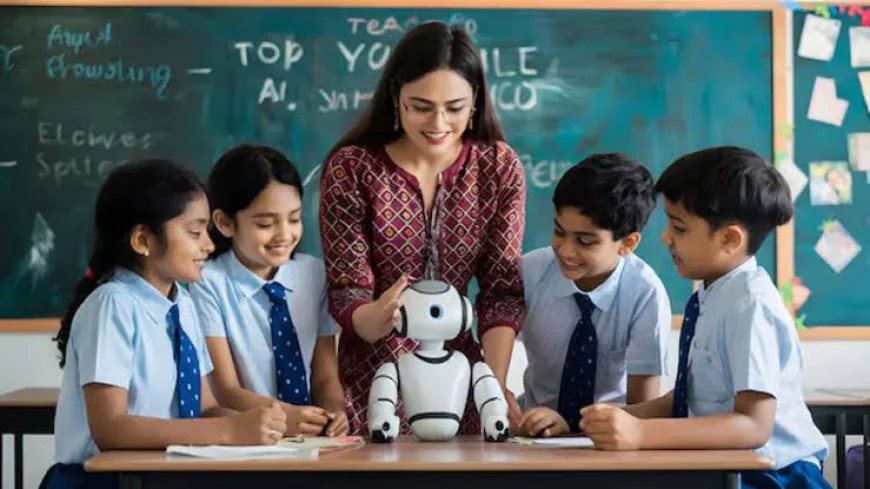
One of SOAR’s stated priorities is inclusivity. The programme is meant to reach not only metro schools but rural and under-resourced institutions too. By doing so, the government hopes to avoid a two-tier system where only privileged students gain AI fluency. There is also particular attention toward encouraging girls’ participation in STEM, a longtime challenge in Indian schooling.
Global Collaboration, Local Strength
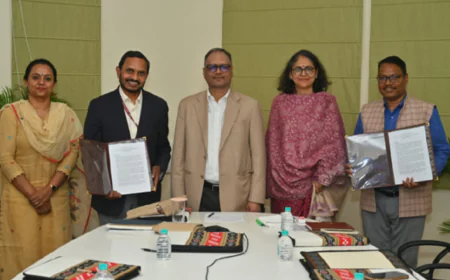
To give SOAR international depth, the government has entered partnerships including with the French government to co-develop curriculum, innovation labs, and exchange programmes. The idea is to ensure Indian AI education aligns with global standards while being rooted in local contexts.
Challenges Ahead & The Long Road
Of course, bold initiatives like SOAR face obstacles. Infrastructure gaps (internet access, devices) remain in many schools. Teacher readiness and motivation can be inconsistent. Plus, squeezing extra modules into already crowded syllabi is no small task. Success will depend not just on design, but on execution, support, monitoring, and adaptability.
If implemented with care, SOAR could transform how Indian students perceive technology — not as a distant field, but as something they can understand, use, and shape.