




































Driverless Taxis Are Coming: How Autonomous Vehicles Are Preparing to Enter the Indian Market
Driverless taxis, once a futuristic fantasy, are slowly becoming a real possibility for Indian roads. As global tech firms test autonomous cars in major cities, India is beginning to explore policies, infrastructure upgrades, and local innovations needed to bring this technology home. The journey won’t be simple — but the conversation has already started.

A Global Technology That India Can’t Ignore
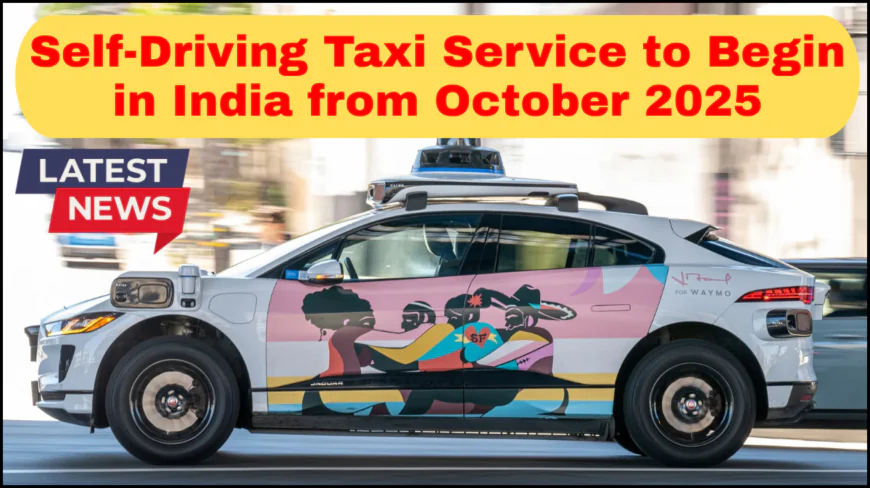
In cities like San Francisco, Beijing, and Dubai, autonomous taxis are no longer experimental toys. They’re picking up passengers, navigating traffic, and running late-night trips without a driver touching the wheel. India, with its growing urban population and rising demand for mobility, cannot afford to stay out of this shift.
But India’s roads are not simple grids. They are unpredictable ecosystems where pedestrians cross anywhere, animals wander freely, and traffic “rules” bend with the situation. For driverless taxis to work here, technology has to be smarter, faster, and far more adaptable than what’s used in the West.
Indian Startups Quietly Building the Future
While global companies dominate headlines, several Indian startups are quietly working on autonomous mobility. They are building sensor-rich prototypes that learn to read chaotic road conditions — not just lane markings. Some are developing AI systems that predict human behaviour on the road, like a cyclist swerving suddenly or a rickshaw turning without signal.
These innovators know that India cannot simply import Western tech. It must build systems that understand Indian roads the way locals do — with intuition, adaptability, and quick judgment.
Government Lays the Groundwork
The Indian government has begun early-stage discussions around safety policies, liability frameworks, and testing permissions. There is interest, but also caution. Concerns about job losses in the driving sector, passenger safety, and cybersecurity must be addressed before driverless taxis can be allowed on public roads.
Several states have already shown willingness to run controlled pilot projects in tech parks, dedicated lanes, and university campuses — the stepping stones toward wider adoption.
A Future Closer Than It Seems
Driverless taxis will not flood Indian streets overnight. But the momentum is steady. With rising investment in smart cities, 5G networks, and AI-powered transport systems, India is slowly preparing ground for an autonomous mobility revolution.
The real question isn’t whether driverless taxis will come to India — it’s when. And when they do, they may redefine how the country moves, works, and travels every day.